
Those of you who know me know that one of my hobbies is sport testing (registering for and taking official admission tests for sport and research, not to apply to school). Between 1990 and 2024, I estimate I took the SAT ten times (and often blogged about it), the GMAT maybe a dozen times, the GRE three items, and the LSAT twice. Oddly, I’ve never taken the ACT, but maybe they’ll invite me to take it for free.
This year the Classic Learning Test (CLT) has been making a lot of noise and, since I still tutor all the major admissions tests, I figured it was time to find out more about this unfortunately acronymed test. The good news was it’s also offered online at-home (the ACT and SAT aren’t at home tests yet), so it’s really easy to scratch my intellectual itch. So I paid $69 and got ready to learn about the clt.
TL:DR (for students/families)

For students trying to figure out if this test will give them an advantage getting into college, the short answer is “probably not” (unless they’re down to be dishonest, which CLT makes a little too easy). I’ll delve more deeply into reasons later but here are some quick hitters:
Is it a different test from the SAT and ACT: Sure, sort of. The CLT is the generic grocery store cola where SAT is Coca-Cola and ACT is Pepsi. It’s mostly the same, most of us will see some differences but we’d likely see more similarities. Scientists could identify lots of differences that wouldn’t matter to most drinkers. Brown bubbly sugar drinks are basically brown bubbly sugar drinks no matter what molecules are used to formulate it.
Is it a better test: No. Not if you define better as has fewer weird questions and quirky things likely to make a test taker get something wrong. Not if you define better as more likely to indicate and clearly define a test taker’s knowledge and abilities. Not if you define better as more transparent and clear about what is tested and how. Not if you define better as more trustworthy.
Is it more likely to get me into college: Probably not. There is less prep material, less information available, and fewer practice tests available for the CLT. Far fewer colleges accept it. Very few scholarship programs accept it. There is almost no application or scholarship program or process in which taking the CLT will let you avoid also taking and SAT or ACT, while if you took the SAT or ACT you could entirely avoid the CLT. The only advantage is its easier to cheat if you take it at home.
Background
The CLT has been around for about a decade trying to make its way onto the college admissions scene. With the rise in Republican control and the shift in the narrative in certain parts of the political landscape around education, the ground has become more fertile for a test that unironically claims to test “Western traditions” and “classics” without addressing the racial undertones of either of those terms. Some red states are taking this test seriously and more colleges (but still not a lot of colleges) are accepting this test.
The big change for CLT came out of the fight that Florida’s governor got into with the College Board over AP African American Studies. Ron DeSantis declared that the CLT was now comparable to the SAT and ACT (with no research to back him, as far as I can find) and that students could now use a CLT score to apply to public Florida universities, meet high school graduation requirements, and earn tax-payer funded scholarships. With this win in their pocket, CLT started lobbying other red states to force colleges to accept their test for admissions. Those efforts stalled in Iowa (home of the ACT), where they did the research and concluded that the test wasn’t up to snuff since it has published no research on the test’s validity, reliability, or accuracy. Having no data except the stamp of approval of Minister of War, Pete Hegseth, did not prove to be a problem in Arkansas, North Carolina, or Georgia, where some public colleges now accept the CLT for admissions (UGA and Tech said nah).
With all this momentum, I figured it was a good time to kick the tires on the CLT.
Taking the Test
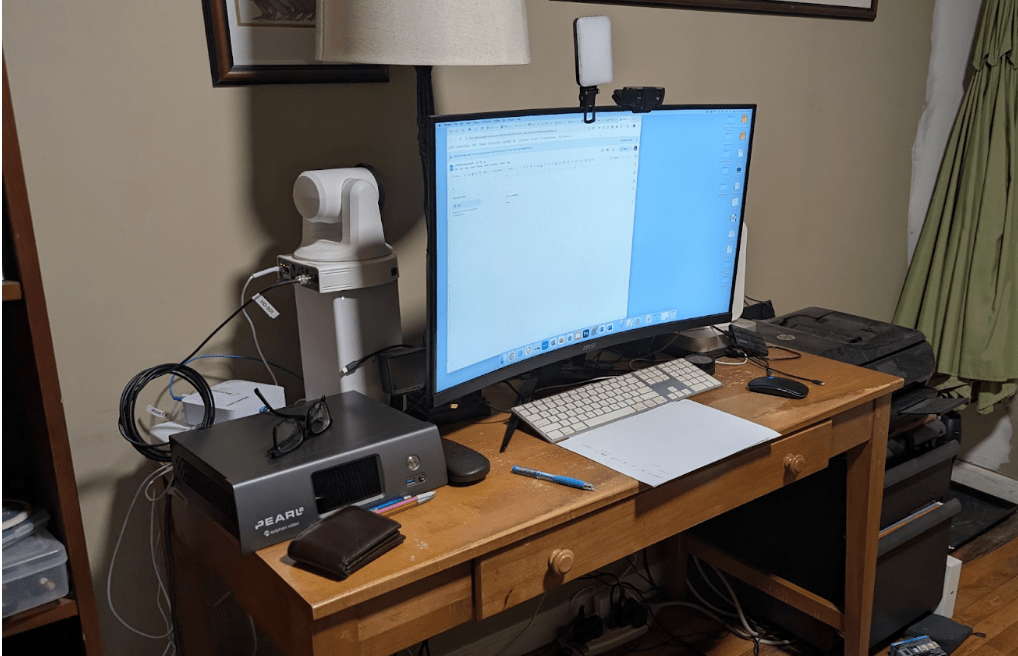
Prior to the test the system required I install a special browser, scan my room with the camera so they could record my set-up. They also said that the desk needed to be empty of everything but the computer, scratch paper, and a drink. Take a look at picture of my set up that I showed on the camera and see if you think I hit that clear desk requirement.
The test allows you to start basically any time you want, although they say customer service is available from 7am – 7pm and heavily imply that you can’t start the test outside of that time but never actually say so. I started at 6:30pm just to see what would happen. Nothing did. I ended my test about 8pm.
Reading:
It’s no big surprise that the four reading passages on the CLT have a different feel. Only one of them was from this century. One of them wasn’t even from the past two millennia. There’s nothing wrong with reading Jane Austen, Ben Franklin, and Cicero, but I’m not sure that a timed standardized test is the time for it. Don’t these passages need more care and attention than ripping through them like they’re a word search to find answers to the questions. Doing this test, unlike the SAT and ACT, I felt like I needed to go back and read the passages as if I was in school not on a test. The passages are hard to follow with typical test prep reading strategies. Despite the passages being a bit harder to read, the questions are pretty simplistic—especially the wrong/distractor answers, which are easier to eliminate than most of those on either the ACT or SAT.
The passages aren’t better than what’s on the SAT or ACT, but they are definitely older and more confusing to follow out of context. I’d say that SAT and ACT passages have an intentionality that has been applied to edit them so that they make sense outside of their greater context and give a more accurate picture of a broader range of students coming from a broader range of schools. The CLT doesn’t seem to care about that. It feels like they just grabbed a random section of old text the founder liked and then wrote random questions about that text because they want everyone to read Cicero.
I should also point out that the analogy questions are deeply weird and hard to understand. On the old SAT, SSAT, GRE, and the Miller Analogies Test, analogies were tested as stand alone questions that asked people to find the relationship between things like GRAIN and SILO or STUDENT and DORMITORY. That is not how the analogies work on the CLT. These analogies are connected to the reading passage, and they seemed to want you to find the passage’s special way of connecting words, not logical relationships. In their book of sample tests, one of the analogy questions has “Andrew: lord” as the original comparison. Huh? Or look at this example from the CLT Technical Report.
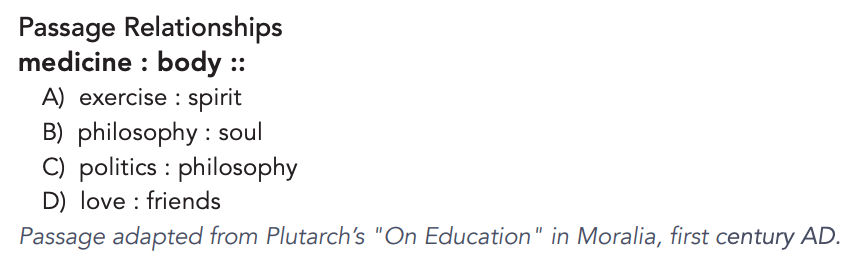
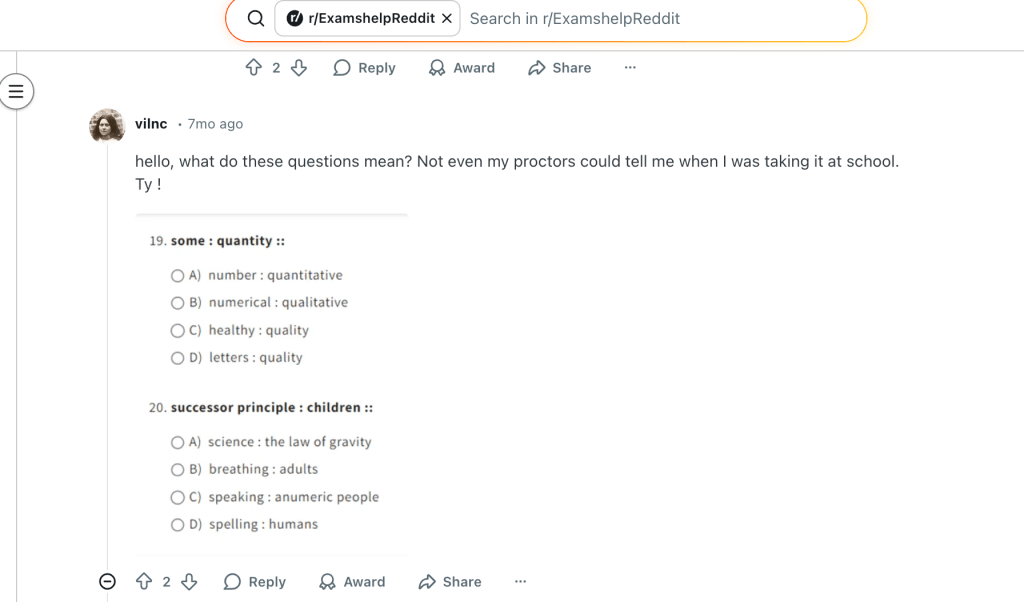
I think that most people would say that the logical relationship is that medicine heals the body, or makes the body feel better. So, which answer choice has the same logical relationship? I can imagine plenty of people making the case for A or D. The right answer is B, but that’s only because Plutarch uses that comparison in the passage. How many high school students would say that philosophy heals the soul? And how many people would know that they aren’t supposed to find the logical relationship on an analogy but should look for the relationship the passage set up. I would not be surprised if I got some of the analogies wrong and high school students miss a lot of them, because the CLT didn’t give any directions for them. If you don’t believe me, here’s what the kids on Reddit are saying:
Writing
Boring. Simplistic. They don’t test any rule in a complex or thoughtful way. I could probably have answered most of the questions without going back to the passage. They tested most of the same topics as the SAT and ACT but also tested the Oxford/Serial comma, one of the most debated features of English grammar, which is silly but on brand for this test. I was surprised when they included a passage by Ruth Bader Ginsberg, since the head of the CLT used to complain about a Bernie Sanders passage defending post offices being on the “woke” SAT. I guess CLT is down with RBG.
Math
The difficulty seems inconsistent. I plugged in a lot more and more simply than I would have on the SAT, which makes sense since the test feels like an SAT from 2015. All the math topics that appeared on the test are standard fare for SAT and ACT math sections: raising a power to a power, dividing numbers with exponents, basic algebra that was easily solved by plugging in, number properties and definitions (the result of adding positive odd to positive odd integer), word problems, line equations, triangles, circles, arithmetic sequences, etc.
All topics appeared on the ACT currently, the SAT currently or the previous version of the SAT, except for formal logic. What makes it different is the weirdness. A geometry question in which a triangle was put inside a circle and the circle was irrelevant to solving the question (but distracting as I was checking to see why the circle was included). The SAT and ACT almost never put irrelevant information in questions, and have never in my memory put on shape inside another and not required the tester to use the rules of both shapes in some way.
The test also does weird things like ask the tester to ignore math logic. Two questions at least (of the 20 or so that I actually read) asked me to divide a square measure (area) by a linear measure (distance). One question said “the numerical value of a circle’s area (in cm squared) is double the numerical value of another circle’s circumference (in cm)” … why are they insisting on being weird?
Security (lack of)
Here’s the main takeaway from my experience: The CLT is a cheating scandal waiting to happen.
When you take the CLT at home, no one proctors the test. No one. Not AI. Not some guy behind a bank of video screens. No one. The “security” they use is recording you with your own camera and then maybe later watching the videos of you taking the test. It’s not clear who is watching those videos or where they are being watched (China? Arkansas?).
Based on what happened with my desk set-up, we know that test takers can violate the testing rules of the CLT without their score getting canceled. I don’t know if that’s because they didn’t review my testing video or they just didn’t care that I wasn’t following the rules. Either way, it raises questions about what else people can get away with. I’ve taken a lot of standardized tests, and they’ve all had cheating issues. Not one of them made it nearly as easy to cheat as the CLT.
Individual cheating is just the start of the problems. Even if the CLT catches someone cheating on the test a week or more afterwards, it will be too late to stop cheating on a much bigger scale. There is nothing to stop someone from sitting down for the CLT at 7 a.m. and writing down their answers to every question. And there is nothing to stop that person from selling those answers to people who want to get a Bright Futures scholarship in Florida or a merit aid from one of the couple hundred colleges that take the CLT. Or, starting next year, to people who want to go to West Point thanks to the Secretary of War. Do these colleges know how easy it is to cheat on this test? Is that what the Navy wants, people who paid for a test score? Because if the Asian Mafia cheating ring or the Varsity Blues scandal taught us anything, it’s that if people can cheat to get into college, they will. There’s no safe way to let people take tests at home without live proctors watching them.
Scoring
Another, more important to students, weird thing about the test is how obscure they are about the scoring. I decided to experiment to try to figure out how it worked. They don’t give a score on the practice tests and they don’t explain how to get a score from the number of questions correct.
I attempted 30 Reading questions and left the rest blank, so that random guessing could not add to my score. In Writing, I also attempted only 30 and left the rest blank. In math I only attempted 11 questions and then left the rest blank.
Below are my scores (the blue text I added to give you context).
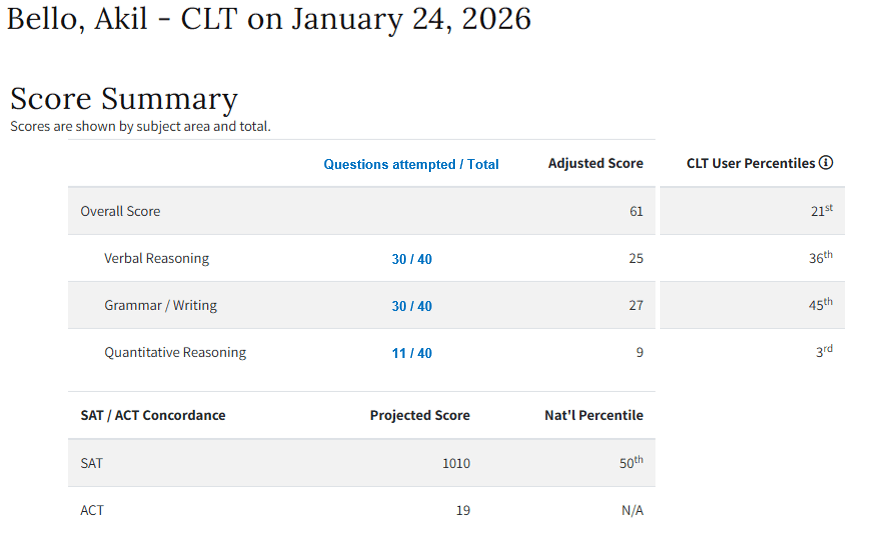
This scoring of this test is odd and hard to make sense of. I don’t know if 1 right answer equals 1 point. From my experiment and from talking to others who took it, that doesn’t seem to be the case. It seems scaled in some way. This matters because there is lots of tax-payer money on the line based on this test. In Florida a score of 11 on the CLT meets the high school graduation requirement. So I wanted to see how few questions I could answer to get that qualifying score. Assuming I made a mistake or two, my test suggests that anywhere from 11 – 15 of the 40 questions correct on the CLT would generate a score that qualifies a Florida student to get a high school diploma.
But also the percentiles make no sense. If getting a 61 is only the 21st percentile then why is it comparable to an SAT in the 50th percentile? Looking at these results I have to agree with College Board’s assertions that their concordance chart is, in common parlance, bull. We know now that 97 percent of people who take the CLT do better than my 9 on Math. How many do better than an 11? CLT does not say (ACT and SAT percentiles are easy to find).
I cannot believe this test has me saying nice things about the SAT and ACT.
The Upshot
So what’s the final verdict on the CLT? The CLT is a weird ideological love child of the 2014 SAT and the 2023 ACT. It feels like what you’d get when a home-schooled religious fundamentalist who read too much and understood too little decides to copy the SAT and ACT. It’s inconsistent, odd, and pseudo-scientific but it has just enough of a patina of science to let politicians who share their ideology justify its use.
It feels a lot like this “intelligence test” that pops up on social media periodically:
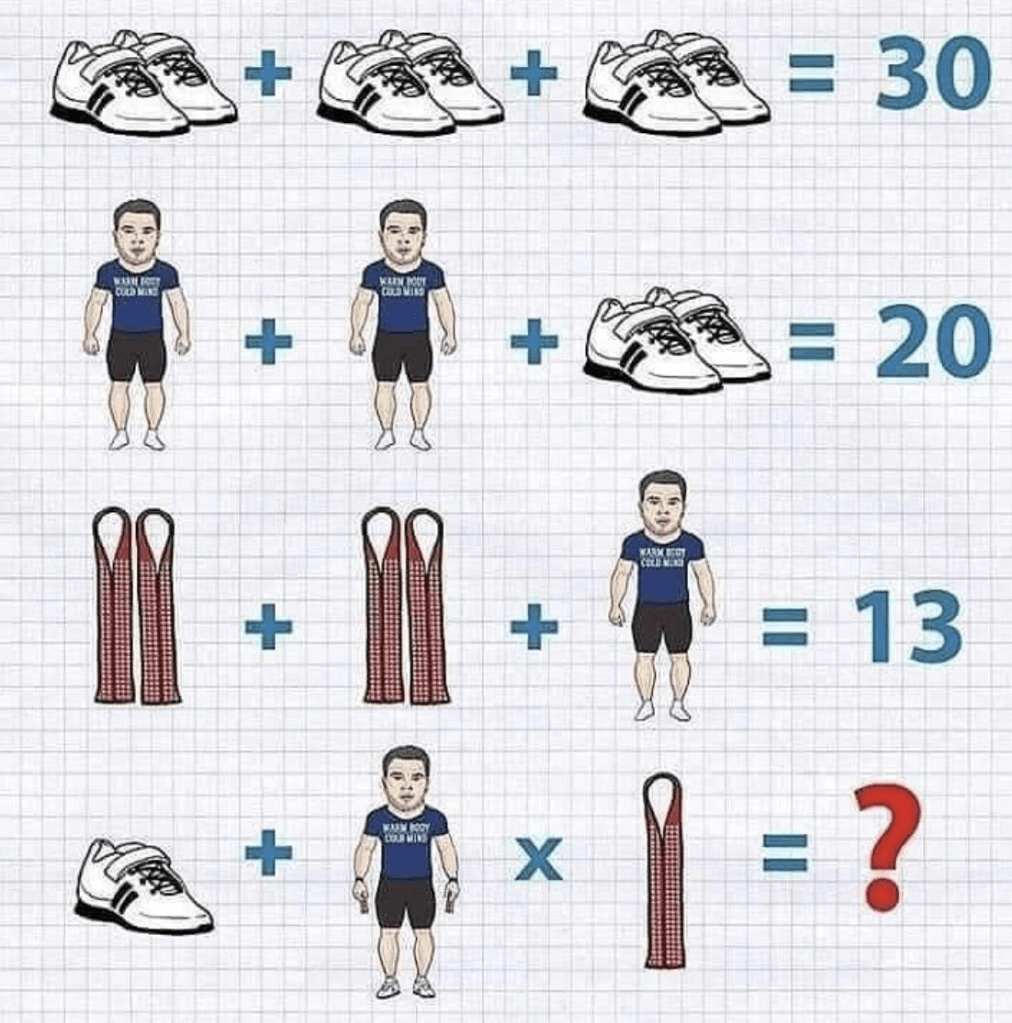
Did you notice the guys hands? Did you notice what’s different in the last row vs the others? Is that intelligence?
I can’t wait for these pictures to become the next admissions test.
I shouldn’t have to tell you this, but don’t forget that it’s your responsibility as a citizen of the internet to pay your way by liking, commenting, and subscribing.

 Bellowings
Thank you for taking one for the team. Apparently the test is everything I thought it was, and less.
LikeLike