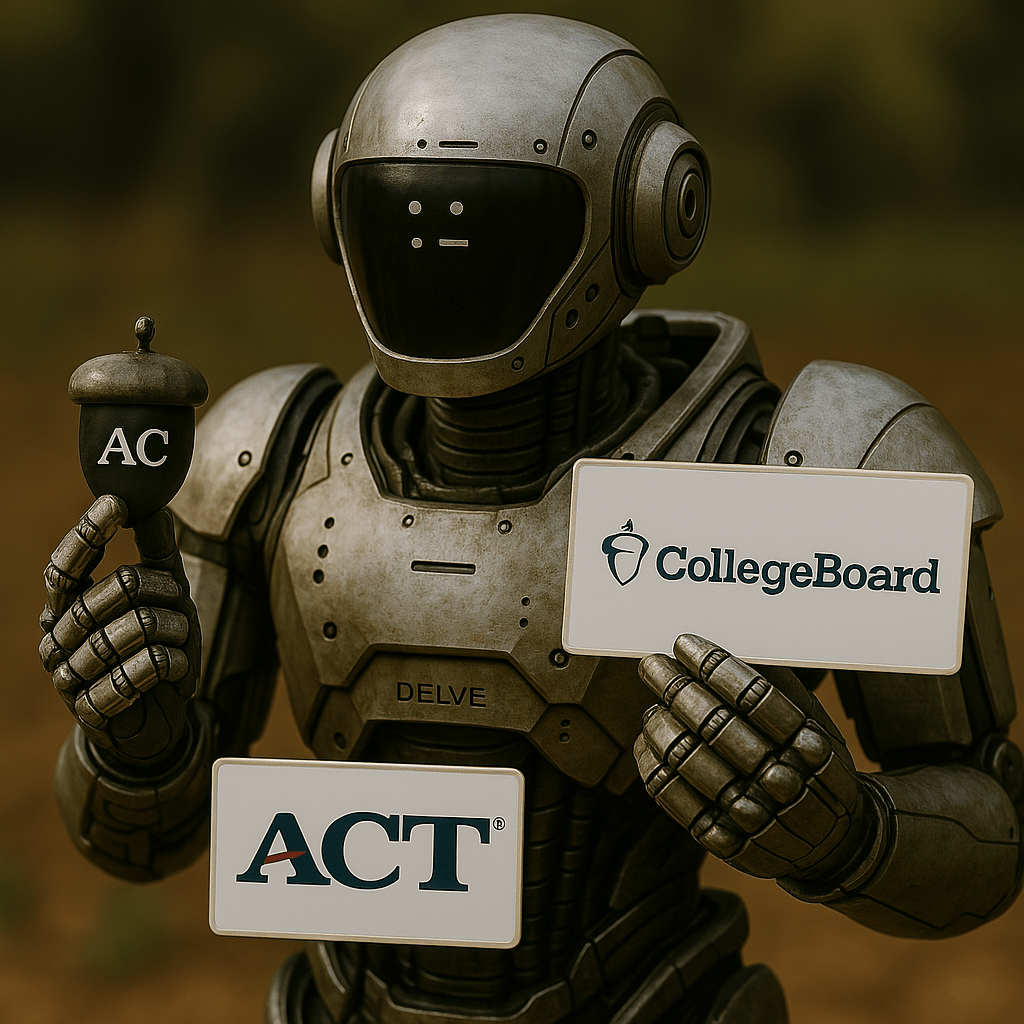
The newest “AI” boogeyman is the em dash. Apparently, the large language models (LLMs) have a tendency to use em dashes. This tendency, like the use of particular vocabulary words, is being used to identify AI writing. And of course, in our modern nuance-free age, the use of AI is framed by AI-haters as cheating and by AI-lovers as appropriate use of technology.
But what if I told you that the same high school and college kids being accused of cheating because they use em dashes had been forced to learn that punctuation mark and encouraged to use that punctuation mark by ACT and College Board. Let’s delve into it!
The stories are endless: the world is aflame with students cheating using AI, schools are struggling to figure out how to catch it, kids aren’t learning anymore. Everyone has an opinion on what’s written with AI, how to detect it, and how much it’s destroying education and the meritocracy. The em dash is the latest victim caught in the AI detection dragnet, but there have been a plethora of others: “delve,” “Firstly, secondly, lastly”, and even “consequently.”

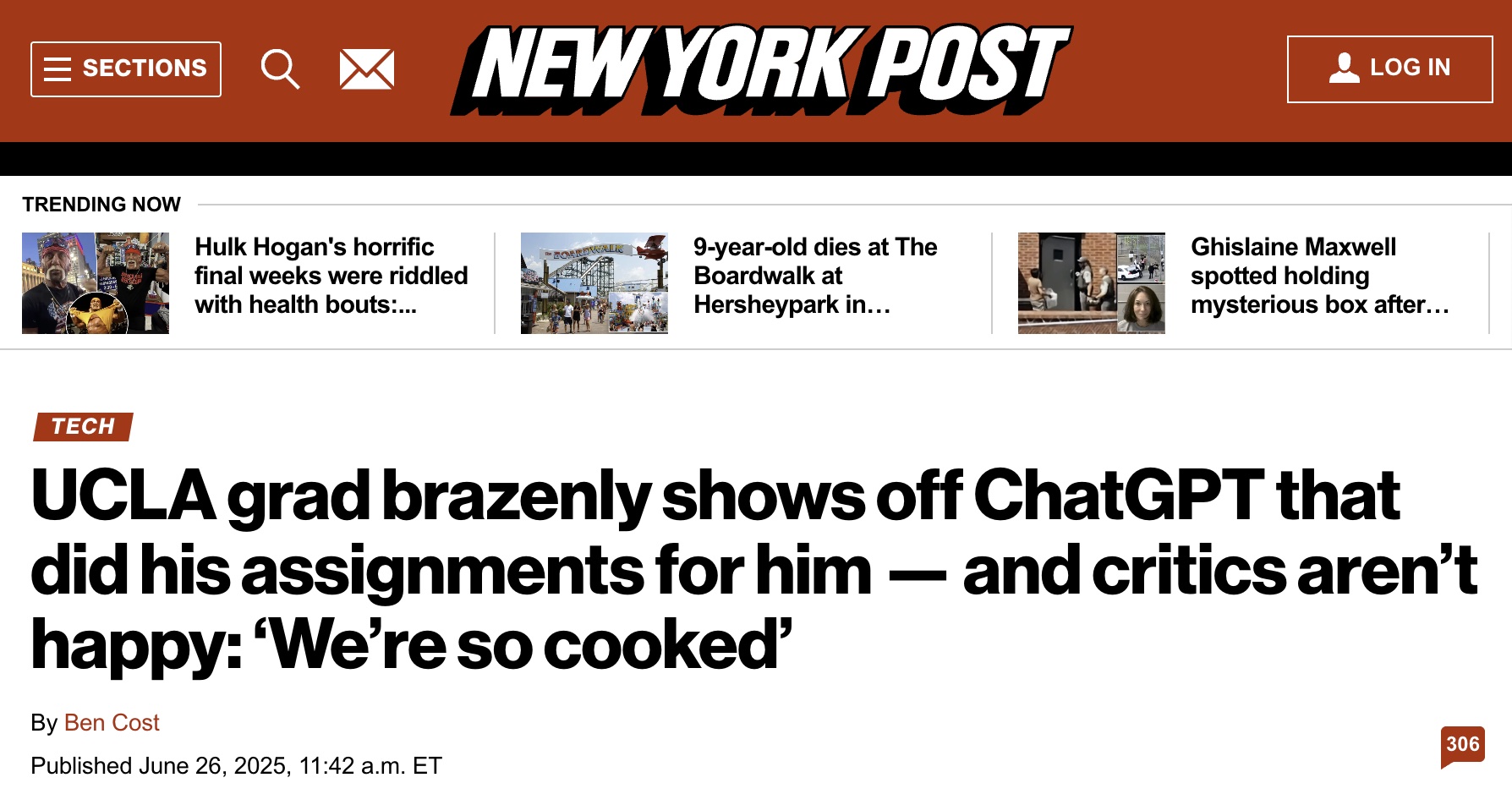
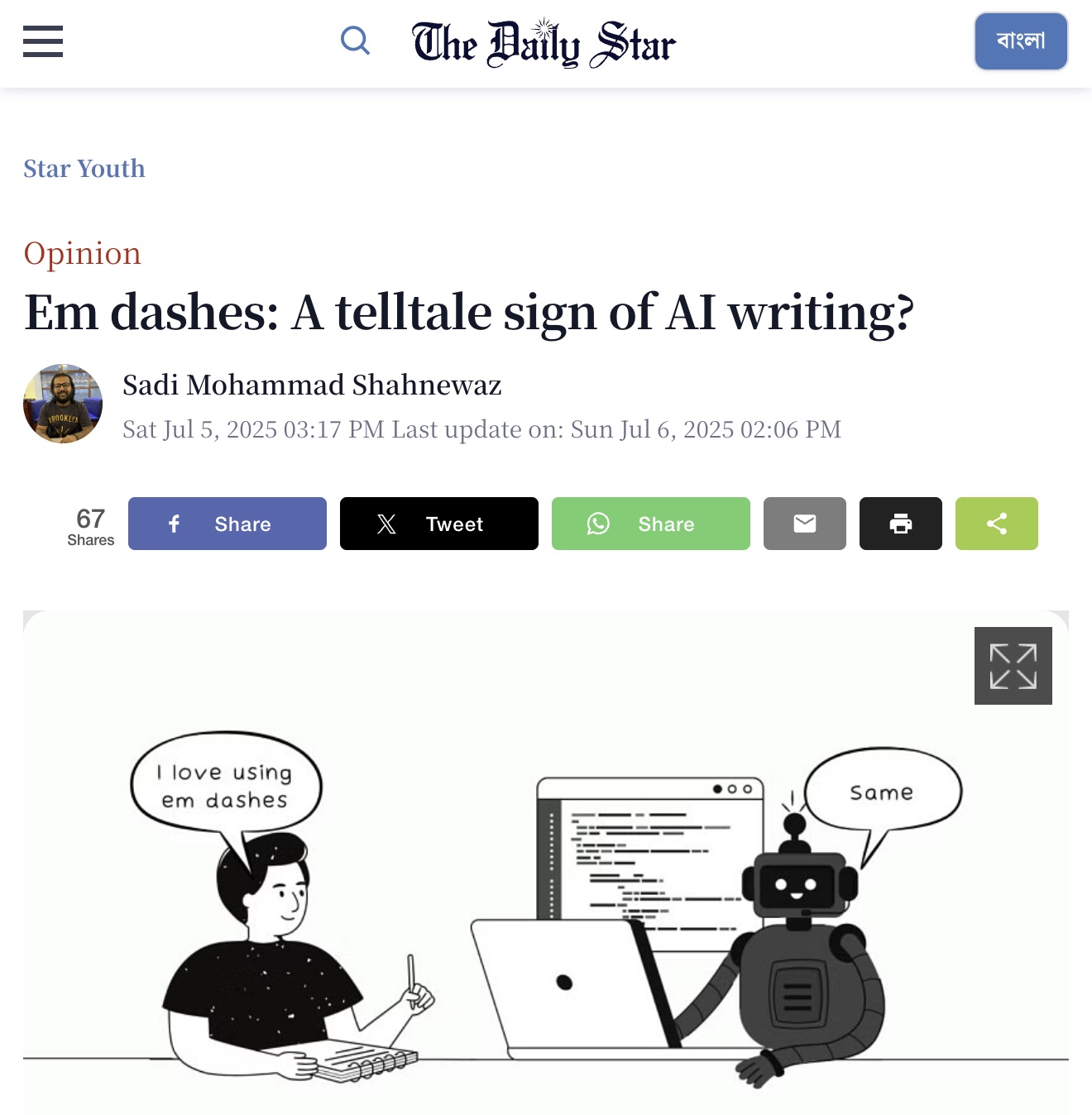
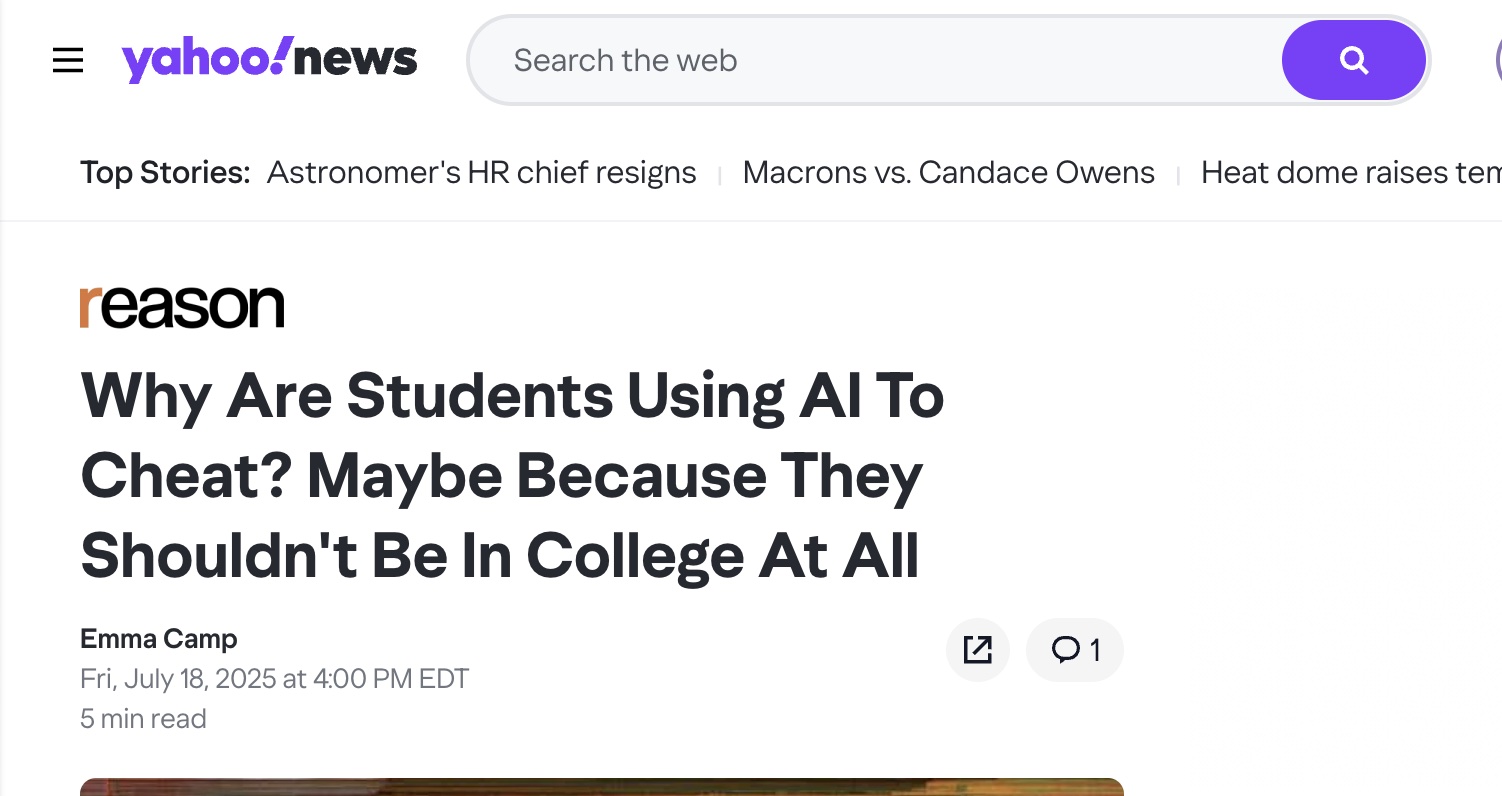
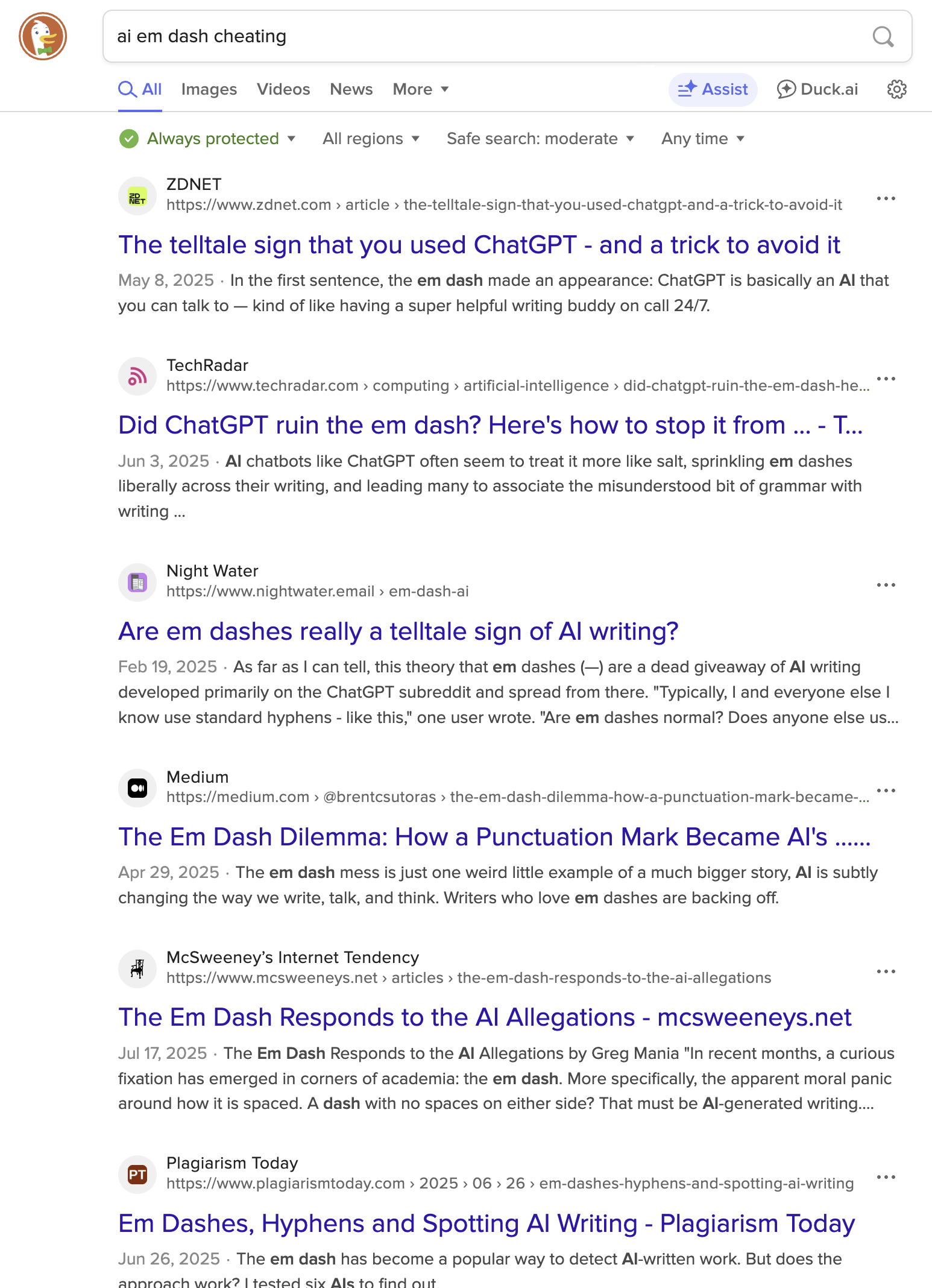
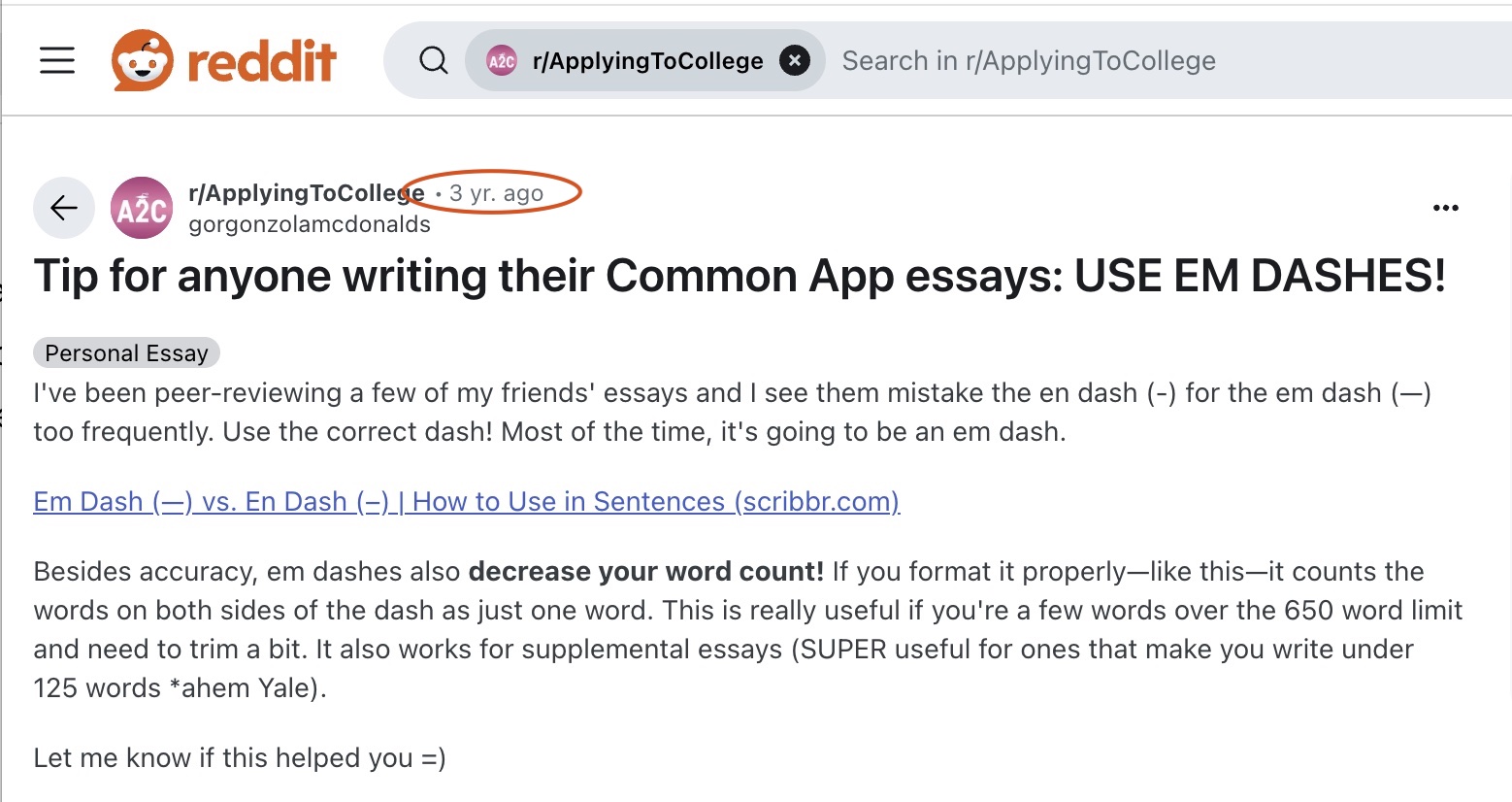
But is this fair to students? High school juniors and seniors who prepare for the SAT and ACT are forced to not only be aware of, but to learn and use em dashes. Every year for the last 3 versions of the SAT and last 2 versions of the ACT, high school juniors and seniors who want to go to college have had to become conversant–maybe even expert—in the use of em—dashes, commas, semi-colons, etc. Check out these examples:

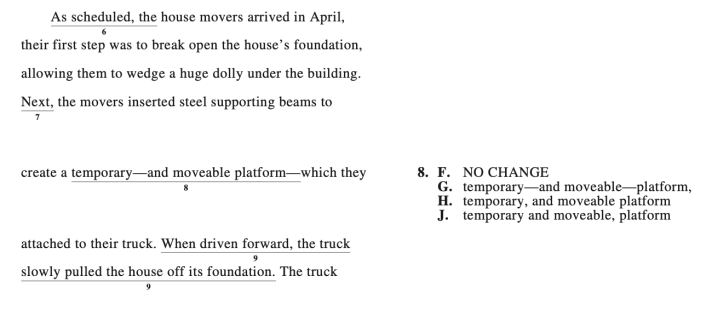
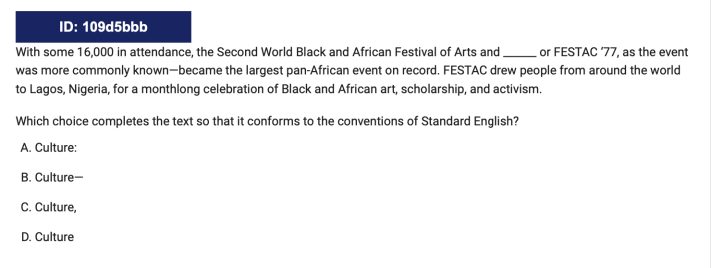
There are over 30 recognizable punctuation marks used in English—the SAT and ACT only test about 7 of them, one of which is the em dash. The SAT and ACT both hyper-focus on a few grammar rules. So to claim that the use of em dashes indicates cheating is not only unfair to students but also indicative of a lack of understanding of tests that despite over 80% of colleges being test optional, still have a ton of weight in the hearts and minds of the college admission world—though they probably shouldn’t.
If you want further evidence of the role of em dashes—not to be confused with hyphens, which I’ve used in the post, and en dashes, which I’m not sure whether I’ve used—check out this screenshot of a notes document I share with some of my tutoring students:

The takeaways here should be
- The SAT and ACT test a really narrow subset of language rules and not intelligence by any stretch.
- Anyone involved in college essays—whether for applications or classwork—should be careful of simplistic binary evaluations of misnamed AI use.
- Students should be aware of trends and cautious so they don’t get caught in the wild overreactions that will lead to AI dragnets.
I’d also love if every college concerned about the use of AI for applications or classwork would reach out to the College Board’s David Coleman and ACT’s Damian Giangiacomo and get their comment on AI use and the narrowness of the rules their tests force students to focus on.
Finally, let me know in the comments (anon comments rejected) how much of this post was written by AI and how much by a human!

 Bellowings
I use em dashes not infrequently – to distinguish from hyphens, and sometimes in concert with ellipses (in which I also use spaces, e.g. “well . . . like this”). But I put spaces around the dashes – as a further indication that I’m expressing a longer pause between the words separated by the dashes. The examples above don’t seem to do that. Would I be safe from the trend – or would I likely be accused of pioneering the next new trend?
LikeLike