So your kid is great at a sport and wants to play at the next level. Great. That's awesome! We all want our children to do what they love for as long as they can. Supporting them is the role of the parent and extends beyond all the miles we put on our cars driving to stuff and the money we spend signing them up for stuff. Since the Operation Varsity Blues scandal, I've learned more about the interaction of sports and college admission. This blog (and others) should help give you some guidance about navigating that interaction. I've also only really paid attention to basketball, so this is focused on that. Other big sports, like football and volleyball, probably have similar patterns and ideas though different specifics. Smaller sports I'm much less sure about, so as you read this, think of it as a rough guide and list of resources not the gospel or unassailable truth.
All parents thinking about next educational steps should start planning 2 years before any transition in educational level. Giving yourself at least a 2 year road map before you want your child to start gives you time to do most things and make most necessary adjustments. But also the more complications there are to the process (e.g. going to college and playing a sport while there), the more time you'll likely need to learn all you need to learn and plan all you need to plan, so make sure you start as early as you can and that you tell your friends so they start early.
So here are a few things I've learned about college sports.
Associations, Divisions and Conferences
There are two sports leagues that operate sports in college, the NCAA and the NAIA. You can think of this as the NFL and CFL. If you've never heard of the CFL, it's the Canadian Football League. It's a professional league but it is smaller, does have different member teams, and not as well-known in America. But it still offers a lot of the same things as the NFL does. That's about the same as the NAIA. I'm going to focus on the NCAA, not because it's necessarily better but because it's easier to talk about one league not two.
The NCAA has three divisions (let's call this levels), and each division has multiple conferences. The three divisions have a blurry distinctions loosely based on things they have in common, like number of students, scholarships, sports, etc. But its blurry. Iona University is a DI and has about 2,600 undergraduates, 24 varsity teams, 456 student-athletes, and spends about $4.3 million on sports. Harvard is also a DI and it has an enrollment of 7,400, 1,200 student-athletes, 42 varsity sports, and spends about $10.2 million. UCLA has an undergraduate enrollment of 32,000, 860 student-athletes, 21 varsity sports (14 for women and 11 for men) and spends about $36.6 million on sports. Queens College in Charlotte is also DI, it choose about 3 years ago to move up from DII to DI.
Clearly division says little about the size of school. It probably says little about the quality of athlete or the level of ability. All college athletes are good athletes (even the 5' 1" coach's son who sit on the end of bench until the team is up 30 and the crowd roars for them to get in the game). Mostly what the divisions tell us from outside looking in is the amount that a university is committed to sports, DI generally reflects an institutional investment in athletes to build brand recognition and profile, DII is probably more a reflection of using athletics as another lever to attract students to the institution, and DIII a community building tool (there are really loose categories based on my knowledge and impressions). Most important is recognizing that Divisions doesn't tell you much, there are some DIII or Juco teams that will be some DI or DII teams. If you're looking for a school first and a team second than the division should matter very little what will matter is what is at the school and what that particular program has to offer.

Division I is the highest profile division. They often use athletics to drive community spirit and public attention. This means the best athletes, the best programs, and sometimes national television broadcasts. DI has the sports we see most. DI can offer athlete-students (meaning athletes for the program who happen to also be students) full scholarships and maybe (if your athlete is good enough or in the right program) money. There are about 350 DI schools and the average size is about 9,000 undergrads. About half of them get some type of aid (yes including scholarships). Fun fact: the Ivy League is a sports league and Harvard has the most undergraduate athletes of all colleges in the country.

Division III, as the name suggests, is the third division of NCAA college athletic programs. DIII programs do not offer athletic scholarships. They tend to be smaller sports programs at smaller colleges. Athletes at the DIII level are likely more truly student-athletes, meaning students who are doing athletics as an extra curricular. DIII schools tend to be smaller averaging about 1,700 undergrads. DIII programs do not offer athletic scholarships, but regular financial aid is possible. About 40% of students at DIII schools are athletes.
Division II sits between DI and DIII because ... math. DII sits between the other divisions in every way, taking on some elements of DI, like offering scholarships (though fewer), and some of DIII. DII schools average about 2,400 undergrads and they only offer partial scholarships, though about 60% of athletes get some form of aid (some form, meaning maybe loans, I couldn't find great data).
There are multiple conferences in each division. Conferences are (or were until the Pac12 traitors messed it up) generally regional associations of smaller groups of schools. The Ivy League is a conference of northeastern private colleges that was established back in the day when America was colonizing this continent. All schools are subjected to the rules of divisions and conferences they play in. For example, NCAA has rules about when coaches can recruit athletes, when coaches can interact with players during the off-season, how many days a week they can practice, etc.
You can search for NCAA information for specific colleges here and for NAIA information here.
Recruiting
If you're being pursued by college coaches (especially DI and DII coaches), if you're ranked nationally, if you have a real shot of pursuing your sport as a money-making career then Division 1 is generally what a player wants (though you can reach the highest heights from any level, in theory). If you're looking to play for primarily enjoyment or possible improvement in the sport, than you're looking at DII or DIII.
Another way to think about it is, if you want to be an athlete-student then DI is the way to go, if you want to be a student-athlete than DIII is likely the target. You'll (your family) have to figure out the role sports might play in your future as you go through this journey and figure out how much time and effort you want to dedicate to sports.
As you go through the process you'll have to sort through the difference between interest from a coach, support from a coach, an offer of a spot on the team, and an offer of admission. These are all different things and it's important to make sure your child is aware of what is currently on offer and what steps might be necessary to turn the current option into the desired option.
In order to get recruited a play has to get on a coaches radar. So the first challenge is getting on a school's or coach's radar. The ways to do this vary greatly based on your talent, high school, AAU program, etc. Bronny James got on coaches' radars by being born, Ja Morant did it by being good and then being in the right place at the right time, and Duncan Robinson did it by shooting the lights out at a DIII. Most players will follow more traditional paths of going to camps, posting clips on social media, managing game film on sites like Hudl, filling out college recruiting forms (every college has a "I want to get recruited form"), having your HS coach reach out to their contacts, and (not or its an and) driving/flying to the ends of the Earth to participate in tournaments. The earlier an athlete gets on a college's radar the more chances they have to see you and the better a chance they have to make an impression.
I've found Harvey Rubin's website to be incredibly insightful, especially for those looking at DIII basketball. Even if your athlete's sport isn't basketball this site will give you a good lay of the land of recruiting at top academic colleges. It has lots of cool things like a regularly updated camp list.
Admission
Generally speaking, coaches cannot grant admission to a university. Coaches let the admission department know the players they are interested in and the admission department will then evaluate the file. Support for a player from a coach will carry weight in the consideration of admissibility but you can't know how much weight. It depends on the institution and the coach's relationship with the admissions department. To ensure they don't waste an admissions officers time, most coaches will to do a pre-read. They'll ask the athlete for their transcripts and test scores before an application is filed so they have a rough idea of the admissibility of the athlete and how much weight they might need to put behind the candidacy to get them admitted. Sometimes the coach's interest will end at the pre-read if the candidate doesn't seem admissible (that doesn't mean the student won't be admitted, but it might mean the coach doesn't want to expend their social capital to help the student).
So student-athletes should always be thinking they have to maintain the highest grades they can to make sure they have as many options as possible. One way to look at sports and admissions is that trying to play a sport might make admission easier (if the coach wants the athlete) but it also makes it harder than just getting into college because both the admission office and the team have to want the student-athlete.
The Jock's Guide to Getting Into College by James Murphy is worth a read. It explores the interaction between admissions to rejective colleges and sports. It's paywalled but if you have an Apple News account you can access it free there.
Also, with the Operation Varsity Blues scandal, the emergence of NIL money, and the growing likelihood that NCAA will allow pay players college sport recruiting is going to change especially in the big money sports (basketball and football, most other sports make no money). If you didn't follow the Varsity Blues scandal you should check out the Netflix documentary with this really handsome guy:
Eligibility
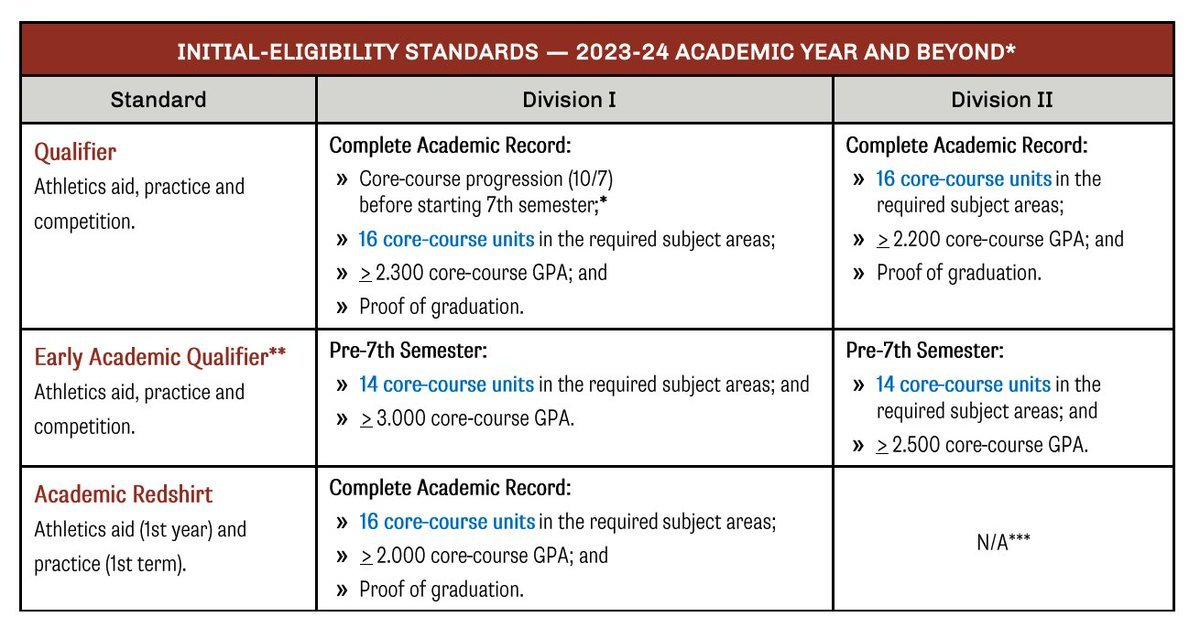
College sports have more rules than just going to college. Players have to meet certain standards to be eligible. I don't want to steer anyone wrong so I'm just going to point you to the NCAA eligibility page and the NAIA page. To play in the NCAA a player will have to register with the NCAA.
Scholarships
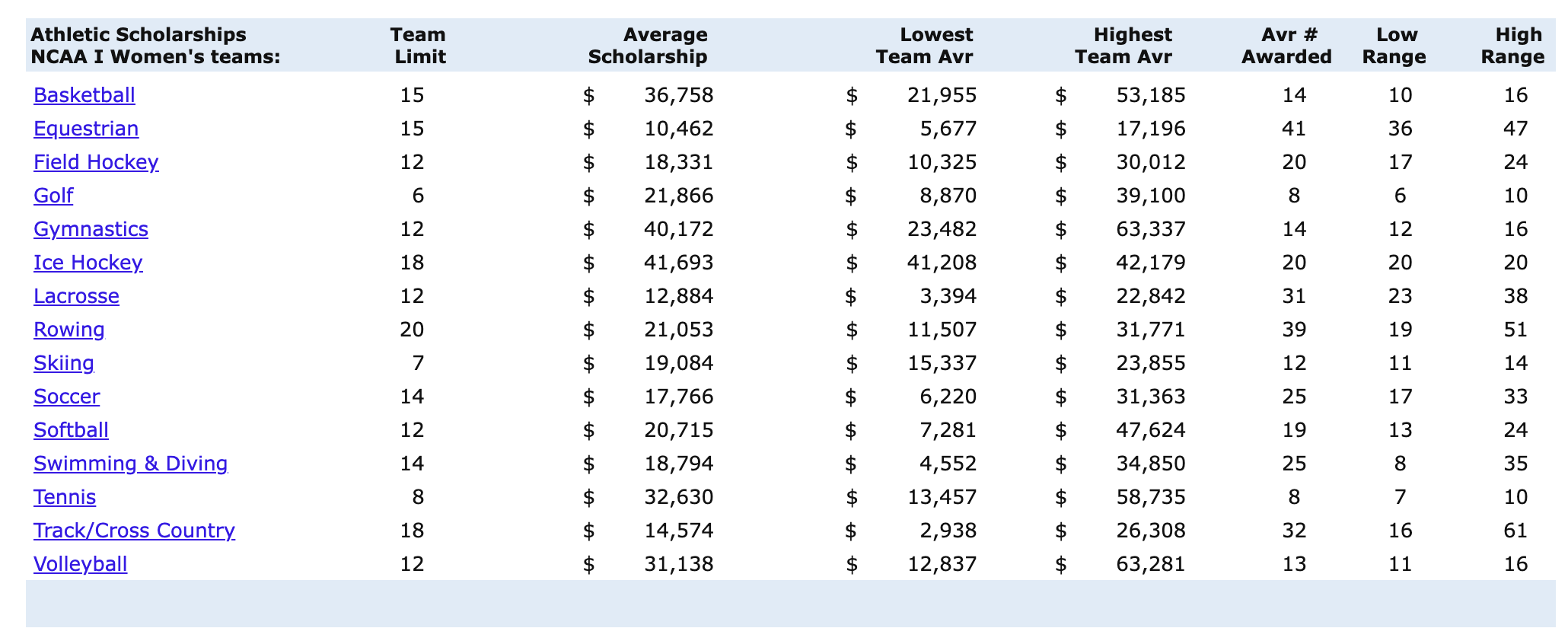
College rules are nothing short of complicated and the rules for scholarships are no exception. The NCAA puts limits on roster sizes, number of scholarships, and other things. DI has the most rules because it has the most scholarships. Basketball and football generally have a greater percentage of scholarships per roster spot than non-revenue generating sports like rowing and fencing. You have to consider carefully whether your family's objective in pursuing college sports is to try to get a full scholarship or to participate in an activity that the student enjoys (this will likely change how you focus on recruiting and considerations of schools). You can spend a lot of trying trying to learn all the rules or you can accept a general guideline: until you have an offer in writing you have no idea if or how much of a scholarship you will get. Also scholarships are for one year and not guaranteed for the next, so buyer beware.
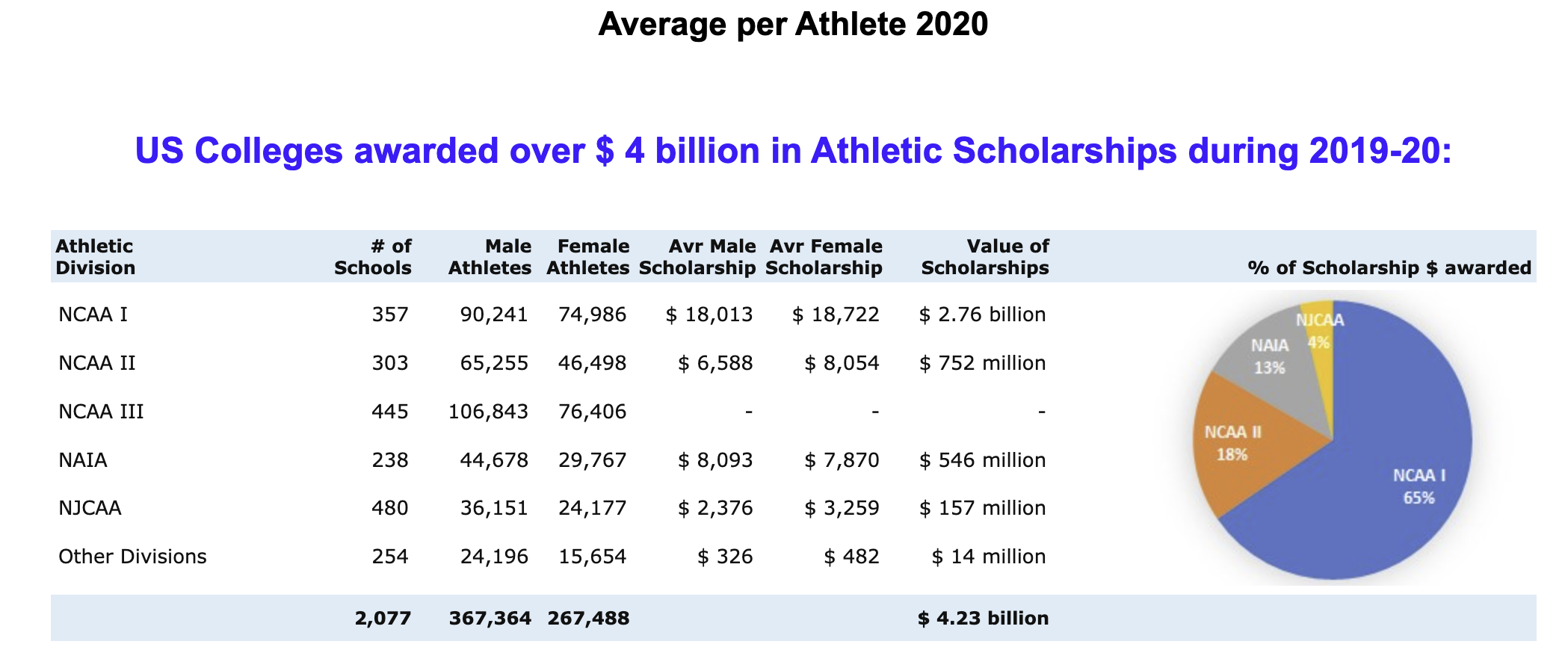
The website below seems to offer a lot of data on scholarship distribution. I didn't check their numbers, but it seems generally right and gives perspective. I would not worry about the whether all the details are right and up to date, since things change every year and are changing faster than ever. This will give you a broad understanding of how scholarships are distributed, maybe even a sense of how much one might expect in scholarships. For example, the site says an average athletic award is $18k. I think I would have expected it to be a lot higher, but what do I know.
Links:
- Scholarship distribution by league and sport (unfortunately doesn't show average roster size)
- Average award per athlete by division in 2020
This story about recent changes to the rules is interesting.
Resources
I've followed Dave Morris on social for years and he is consistently helpful. When I started this post I asked Dave if he had any specific blog posts on his site I should point people to, true to form he sent me a great answer that references useful resources that weren't just his. I love people who choose to be helpful, not commercial (he runs a consulting business helping people navigate sports and college). Here is his reply to me (only lightly edited):
-----
Well, there's my blog, and the academic/athletic recruiting timeline page: https://collegeathleticadvisor.com/dualtracktimeline/ which includes links to the NCAA Eligibility Center, Common App, etc. Beyond that, there is a TON of low-quality scare stuff out there, you’ve made me really think about where I get my information! In terms of actual blogs/newsletters there are a couple of good ones outside of basketball:
Maybe the most accessible and best overall blog is The Gist Sports it’s supposedly focused on women, but I think the true audience is people who are smart and want good information.
John Cazono is great, but focused on the west coast and D1, primarily, his coverage of the Pac12 remains elite even if the conference no longer is.
24/7 Sports is the least bad of the big recruiting sites. There are a bunch of sport specific sites like TennisRecruiting.net, TopDrawerSoccer.com, and SwimSwam.com
On the soccer front: SoccerJournal is very regional, focusing on New England, but their coverage of soccer recruiting is usually very informative. GirlsSoccerNetwork.com is another soccer focused blog that often delves into recruiting. the twitter account @lmcollegescoccer is a must follow.
Scams
Finally, as Dave alluded to there are lots of questionable businesses and characters in this world. Be careful. Lots of tournaments, coaches, recruiting websites, etc that make big promises about the level of exposure and access but don't deliver. Talk to former players, your community, coaches, etc. and vet everyone before paying them money.
Players paid thousands for a new chance at college football. Where did the money go?
This Chris Quintana (always know who writes the articles you read, it will help you get to know who is trustworthy) USA Today two-part series explores some less than reputable post-grad football programs. It's well worth reading for the buyer beware of it all.
This article explores the NIL money. The quotes that sticks with me are "One shocking discovery was that over half of NIL deals are valued at $100 or less." and "The median disclosure value, meaning the middle price tag when all deals are sorted from least to greatest, is actually just $62. The average is much higher at $2,716." Two thousand isn't high!
Finally, this article in the Atlantic explores the racial implications of the current college sports set up. It's a good, but enraging read.
Other Resources:
- NCAA Guide for Student Athletes
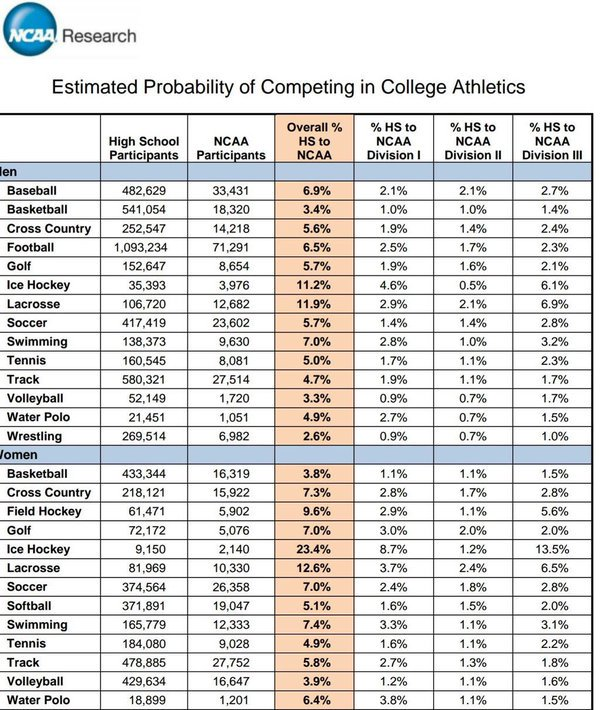
- NCAA Probability of Participating in sports