I've recently been talking to a lot of friends about how to help their children in 9th - 11th get ready for college. I keep inefficiently sharing the same resources over and over again, so I finally wised up and am going to post my current favorite college admissions resources here. I’m listing mostly informational resources. If I list a blog that doesn’t mean I endorse or recommend the company's services.
This post will evolve over time (I've edited and added to it 6 times in the last 2 days) so feel free to check back periodically and see if there is anything new added.
------
There is a lot to the college process so I’ll break this resource list into a few general categories:
1. Academic preparation
2. Financial planning
3. College Research
4. Admissions strategizing
Academic Preparation
The core of preparation for college is completing high school ready to go to 13th grade (that's really what college is. . . continuation of education beyond 12th grade). So focusing on a well developed enriching full academic experience in high school is the key. The trouble is that there is no standard curriculum in the US or even standard requirements to begin college, so families are left to figure out (in partnership with their schools) what’s the “best” preparation for a currently undefined educational future. It’s tough and there is no one right answer. I’ll try to provide some context here since I can’t give answers.
- Here is a great twitter thread by Marco Learning’s John Moscetellio about the race to take 9 billion AP classes (and it also exposes a test prep company pushing that lie).
Financial Planning
One of the most crucial parts of this process is setting yourself up to ensure that college is affordable. I don’t have great resources for financial planning (or know any college financial planners that I can recommend) but hopefully I’ll add some soon. Here are a few resources to help you think though paying for college:
- Ron Lieber - I loved his book and how he framed thinking about paying for college. Its worth checking out. Here is a great chat Ron did with my friend Marie ACCEPT Presents Ron Lieber, author of The Price You Pay For College
- For those of you who like looking at data, Jon Boeckenstedt, High Muckety Muck at Oregon State U, has a great blog about all things college. It's generally focused on those in the profession but the data is useful. This post shows you how deceptive college lists prices are. Private College and University Tuition Discount Rates, 2010, 2014, and 2018
- Check out the edmit.me blog for some great info on paying for college.
Scholarships
- Look for scholarships, you can start here, here or even here. You can start finding scholarships that are exclusively for 8th, 9th or 10th graders.
- Check out organizations like Posse or Questbridge
Choosing a College
Make sure your search starts with and is driven by educational and career objectives not brand name and wealth of the institution (which is what drives most rankings).
- Use search tools that let you find places based on interest and education. Many search sites ask in their first 2 questions what’s your GPA and SAT scores, that’s using admissions criteria to drive the search process rather than using education or career objectives. Don’t use those sites, especially not for an initial search.
- Don’t let rankings drive the process. Rankings are subjective BS!
- Have You Heard podcast
- Revisionist History podcast - part 1 and part 2 on rankings
- Big Future is a good flexible search where you can search by lots of criteria (it changed recently and isn't as good but let hope they fix it soon)
- College Data's search has CDS data and allows you to weigh search factors. Money magazine rankings let's you give various factors your own weight.
- Back to Jon B's (not the crooner from the 90s) blog this one lets you find out which college offers degrees in that major you want.
- College Results Online and College Scorecard are good for getting a different understanding of outcomes and school environment.
Test Preparation Resources
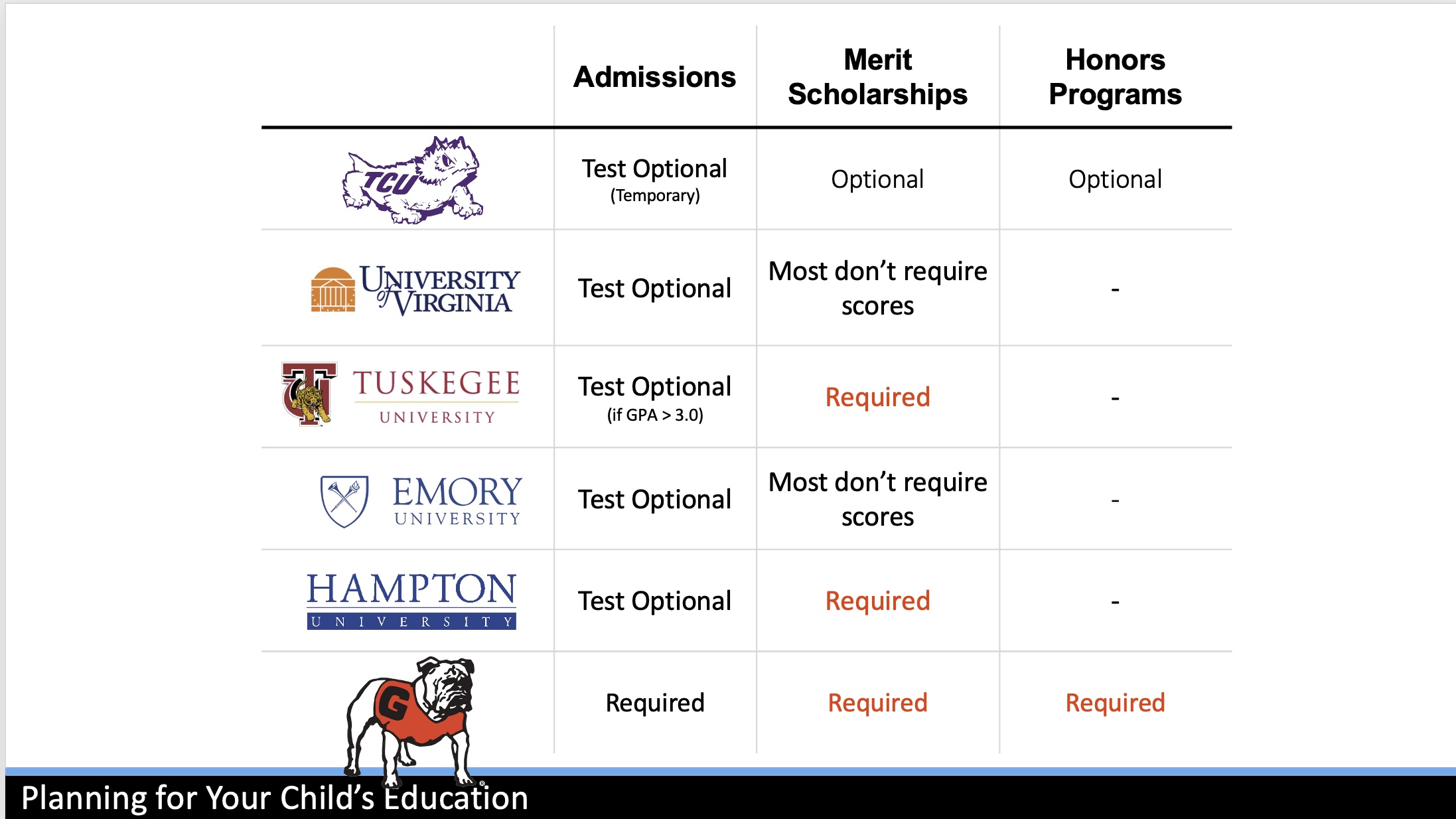
Given the changes in college admissions in the last decade (that accelerated in the last two years), there is a real possibility that you don’t have to take the SAT or ACT at all to get admitted to the college of your choice. Many colleges have instituted test optional (students choice whether to send) policies or, like the University of California, they are completely test free (won't even look at SAT or ACT). So your first question should be “does my student need to test?”
Understanding Test Optional
- Me on Yahoo! News talking about test optional
- This article by Chris Quintana (a reporter worth reading, many aren't).
- This article in WSJ (note it focuses on big name schools, which often don't fully represent whats going on at other schools) is worth reading.
- Click here to find the most up-to-date list of policies regarding testing for admissions purposes: fairtest.org
- A webinar with my friend Jennifer Jessie about test optional. This was early in the panni but it still should give you lots of good data and a nice presentation of the state of admissions in 2020. College Admissions during the Coronavirus- Impact on SAT/ACT/GPA 2020
- Warnings: Many/most of the articles that say colleges don't really mean optional come from test prep business, college admissions businesses, or both, and thus they have a strong financial motivation to make you believe only they have the secrets to admissions.
A student should only take the ACT/SAT if they can answer yes to at least 2 of the three questions below:
- Is it safe?
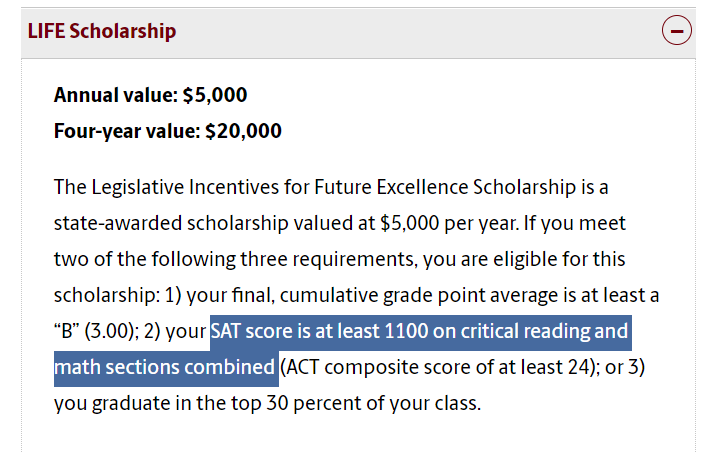
- Is it necessary (does the college require it for admissions, scholarships, or honors programs)?
- Is it helpful to my application (will you score above the 50th percentile of admitted students at the schools you're applying to then it might maybe perhaps potentially be helpful)?
How do you prepare for the tests?
If you’ve decided to prepare for the test
- This blog from Compass discusses when should test prep begin and there is the graphic below that I created (its a pre-panoramic timeline so you might need to adjust it based on the Delta Lambda New situation near you).
- Get some kind of help. Whether books, course, tutor whatever. If you have help it will likely be easier and more effective than if you didn’t prepare or prepared on your own.
- Check out this great guide to tests by Compass Prep (FYI I don't say great and test prep company in the same sentence often) Compass prep puts out the really really good info on testing. This guide is amazing. While they do focus on highly rejective schools however (but they are pretty up front about that)
- Khan Academy SAT prep is better than nothing and free. It provides familiarity with question types and some strategies but to me it’s test prep in that it doesn’t provide the shortcuts and “strategies” can often make big differences. As free resources go, 1600.io's free course seems more like true prep than Khan.
- If you want to get an assessment of what your score would be today, just take a practice SAT or ACT at home and score it (or find a test prep company that proctors - if we're not in a panasonic - tests for free).
- You can compare the two tests with a concordance chart.
Admissions Strategizing
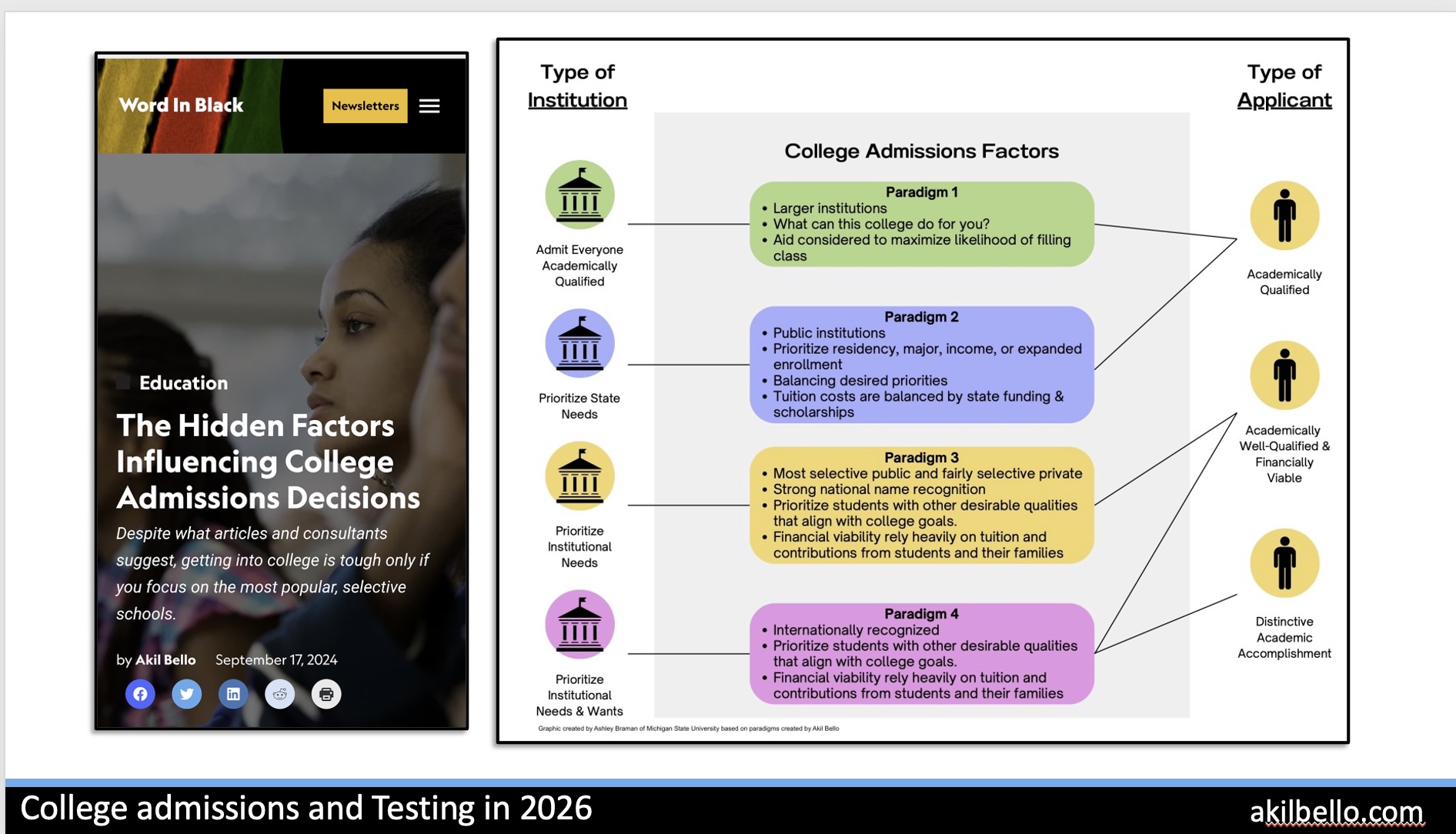
The things I think about as admissions strategizing tend to occur in 11th and 12th grade: Test prep, where to apply, where to apply early decision/action, etc. There is a huge industry of private college counselors who you can pay to give advice on these things. It's not necessary to get a private counselor but some people find it helpful. I know I’ve learned a ton about colleges from some really good private counselors. Below are some of the most helpful, honest and knowledgeable people I know in private counseling.
- Mark Moody was kind enough to share this guide for 9th and 10th grade parents
- College Wise: Underclassmen Course
- Jenn the Tutor’s Admissions Support Group
- While I hesitate to post this without full context I want this data tracked. So here is Jeff and Jennie's spreadsheet of early admissions vs regular admission rates. It's good to be aware that at some places the differences in admit rates are huge
Who are my go to counselors?
- The counselor in your high school
- Independent counselors
- Dr. Ashley Bennett, NY
- Keith Wilkerson, Philly PA
- Raquel Maysonet-Sigler, Brooklyn NY
- College wise - I love this company. They set the right tone. I’ve never met a counselor of thiers who I didn’t like was smart and knowledgeable about the industry, which is not something I say lightly. My favorite folks in this place are: Allison (CA), Katie (CA) and Breanne (not-NJ) (I will never say Arun because that would swell his head).
Additional Things
- Georgia Tech’s blog is amazing and really informative about the process.
- UVA Blog with Dean Jeannine Lalonde (she’s also on twitter)
- The Crush - Nerdy in the weeds podcast about higher ed
- How I Got Into College Podcast - This is a cool series of interviews with various people about how they went to college and into their current career.
- This interview I did: EdCast 150 -- The Optional SAT and College Admissions
- If you want to be depressed about access to higher education or like rich people crime documentaries, check out Netflix's Operation Varsity Blues
- Documentary about the SAT and its corrosive influence on higher ed, The Test and the Art of Thinking
Warnings:
- Never use PrepScholar.com - they are a marketing company with great SEO so they come up first on many testing searches. I don’t think they offer quality information at all.
- Don’t listen to private college counselors who are trying to sell you the secret sauce to the Ivy leagues, they are almost always snake oil salesmen who center every college discussion around 8 schools rather than thinking about the hundreds of great colleges around the country.