When the headline Parents trust report cards more than test scores — with consequences for kids crossed my feed it inspired heavy eyerolls. While I love new research, the headline here didn't bode well at all, rife with assumptions (trusting report cards is bad, test scores are good) and fear mongering (ConSeQueNCes FoR KidS).
After reading the article, my frustration grew. But stay with me while I dive into the problems with the framing, the questions about the research, and what psychometricians should do to solve their 100-year-old problem.
- The study assumes test scores are the correct signal. It documents that parents prefer grades. It does not establish that tests are more accurate measures of a child's actual skills or future outcomes. That assumption is load-bearing and never examined.
- Parental "distrust" of tests is conflated with parental ignorance. 40% of parents in the study said tests are biased. Nearly 30% said scores reflect family income more than ability. These are not obviously wrong beliefs. The article treats them as cognitive failures rather than reasonable skepticism of a deeply flawed system.
- The study measures stated advice about fictional children, not real parental behavior. Parents on a paid survey platform were advising hypothetical parents about hypothetical fifth graders. The leap from that to "parents are underinvesting in their children's human capital" is not supported by the data.
The Study, The Article, and the Assumption Buried Inside Both
Derek Rury (Oregon State University) and Ariel Kalil (the university where fun goes to die) asked over 2,000 self-selected, paid parents on an online survey platform to advise other parents on how much time and money to invest in hypothetical fifth graders, given varying combinations of grades and test scores. They found that when grades were high but test scores were low, parents didn't invest more. When grades were low but test scores were high, they did. Parents weighted grades over test scores consistently, across a sample that was 68% white.
The finding is real and worth discussing. What bothers me is the conclusion. Both the researchers and the reporter, Jill Barshay, conclude that parents are being misled. That grade inflation (is grade inflation in 5th grade even a thing?) has created a cognitive bias preventing rational investment. Barshay writes that "inflated grades may feel encouraging, but they can send false signals both to students, who may study less, and to parents, who may see less reason to step in."
The assumption baked into both the study and the article is that standardized test scores are the correct signal, and that parents who weight grades over tests are making a mistake. Neither stops to ask the obvious question: why would parents trust test scores?
Of Course Parents Trust Grades More
Study after study shows that parents generally trust their children's teachers, despite ongoing political rhetoric trying to sow distrust of public schools. They know the teacher. They've seen the homework come home. They've watched their kid struggle or breeze through the chapter on fractions. When the test comes back with a 78, they can see which questions were wrong. When the report card shows a B+, they have months of context for what that means. Grades are transparent. They're personal. They're local. They speak to a known child in a known classroom with a known teacher who can be called or emailed. Parents may not always agree with a grade, but they can interrogate it.
Now let me tell you what a parent knows about standardized test scores.
When my sons were in 2nd and 5th grade, their school gave them the Iowa Assessment. We weren't told it was coming. Months later, scores arrived in the mail with no explanation, no context, no conversation from the school. The report gave me national percentile rankings in categories like "reading: informational," "domains: author's craft," and "cognitive levels: essential competencies." The explanation said scores "summarize data by the different levels of cognition required by the items." Whatever that means.
At that point I had spent over two decades reading score reports from approximately 30 different tests. I was still stumped.
One of my sons scored above average in almost every category in 5th grade and below average in almost every category in 6th grade. Same school. Same house. Same parents. Did that mean his teacher was ineffective? Did he blow off the test? I didn't know. The 6th grade report didn't tell me. It didn't even acknowledge the 5th grade scores. When I asked the school what the scores meant and what they would do with them, I got nothing useful. The only thing those test scores allowed me to do was rank my child against children in schools I'd never visited, taught by teachers I'd never met, in towns I'd never been to. The entire apparatus was designed to produce a comparison. Not information. Not guidance. A ranking. (My son later admitted to giving no effort on the 6th grade tests!)
This isn't unique to elementary assessments. I wrote last year about the useless PSAT score report that promises personal feedback but delivers a bar graph that even I, with decades of experience in this industry, find useless. If we can't make the score reports for one of the most widely-taken tests in the country useful or informative, why are we surprised that parents reach for the thing they can actually understand?
Test scores tell you who your child beat, not what your child knows. So yes. Of course parents trust grades more.
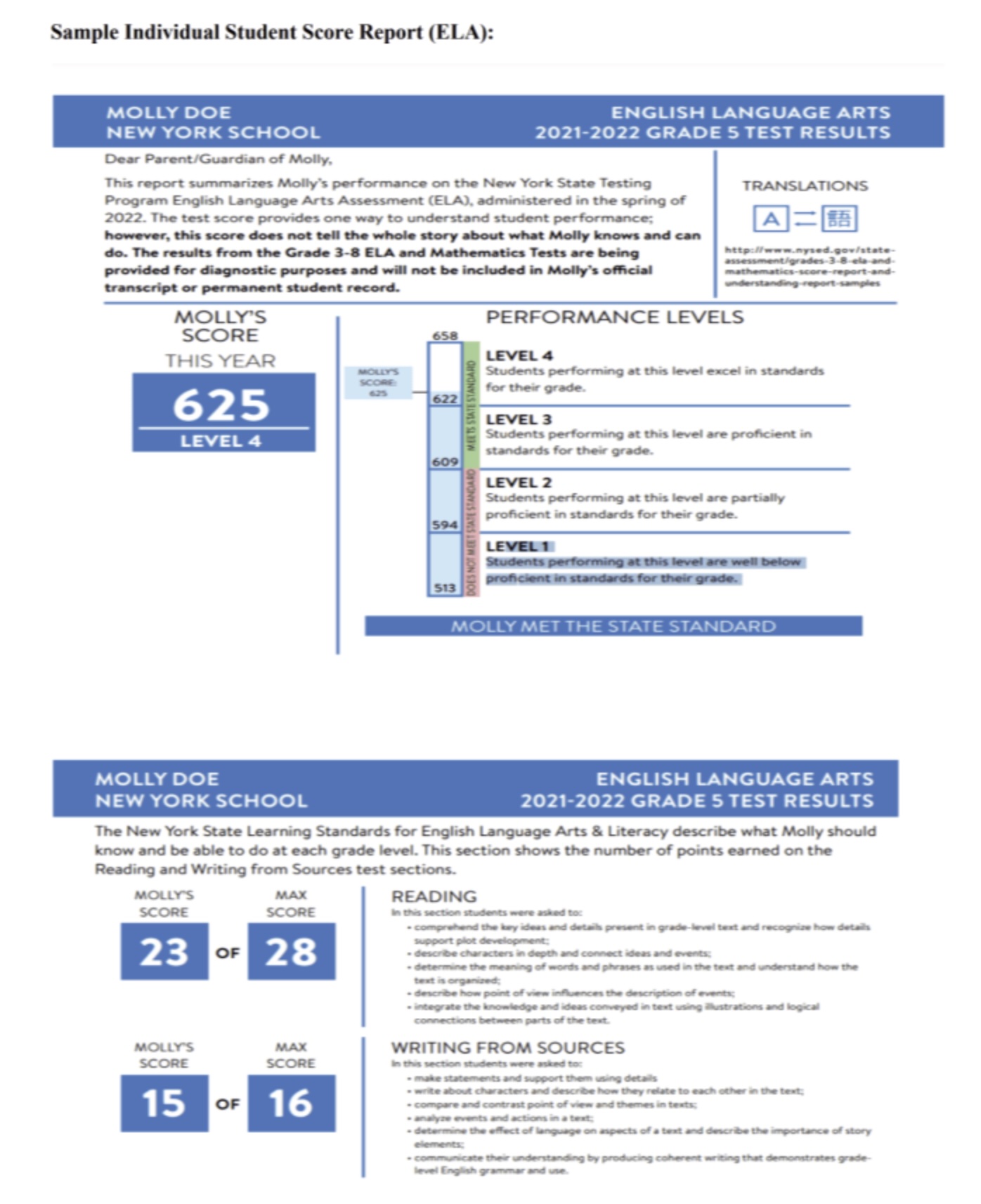
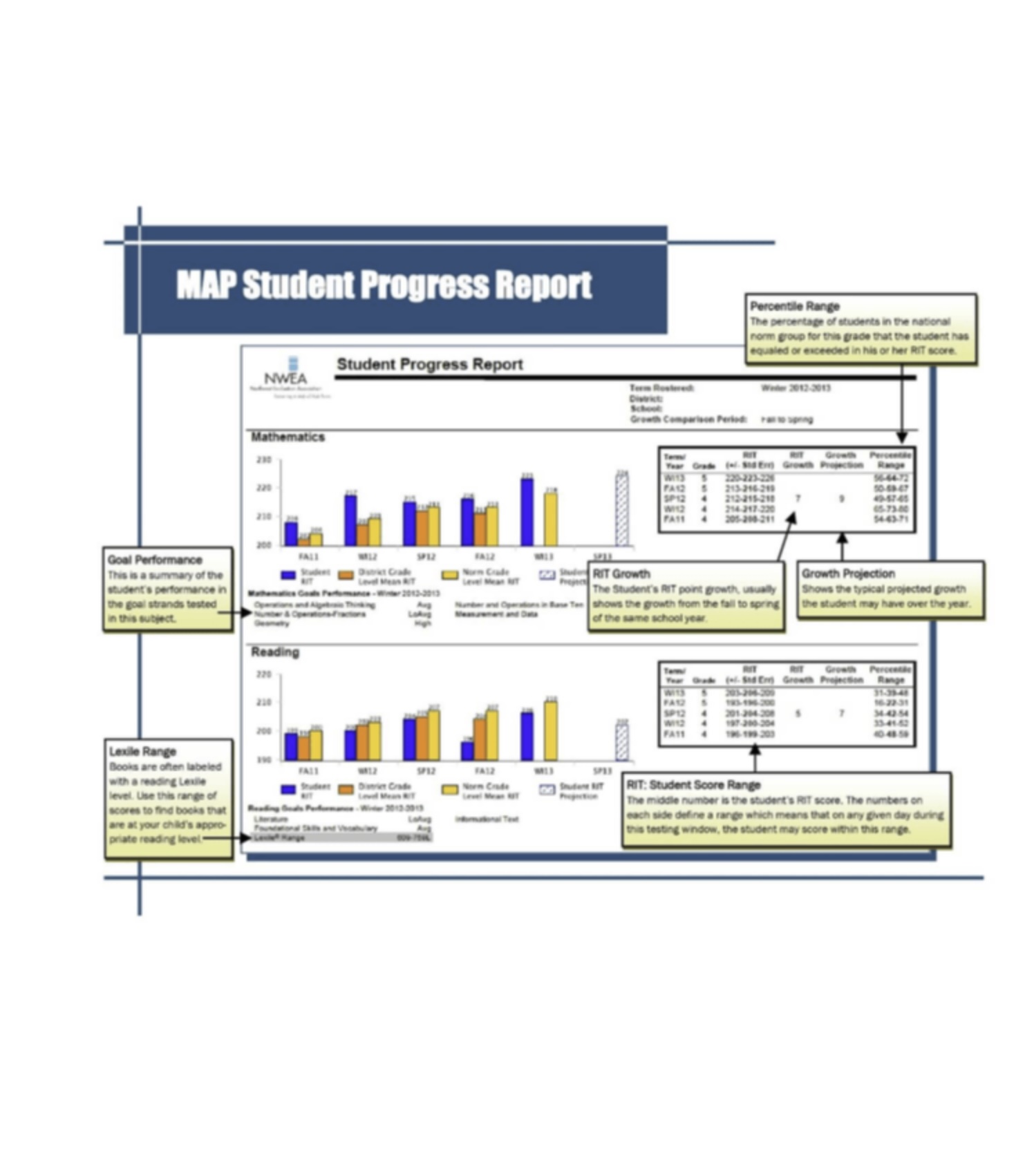
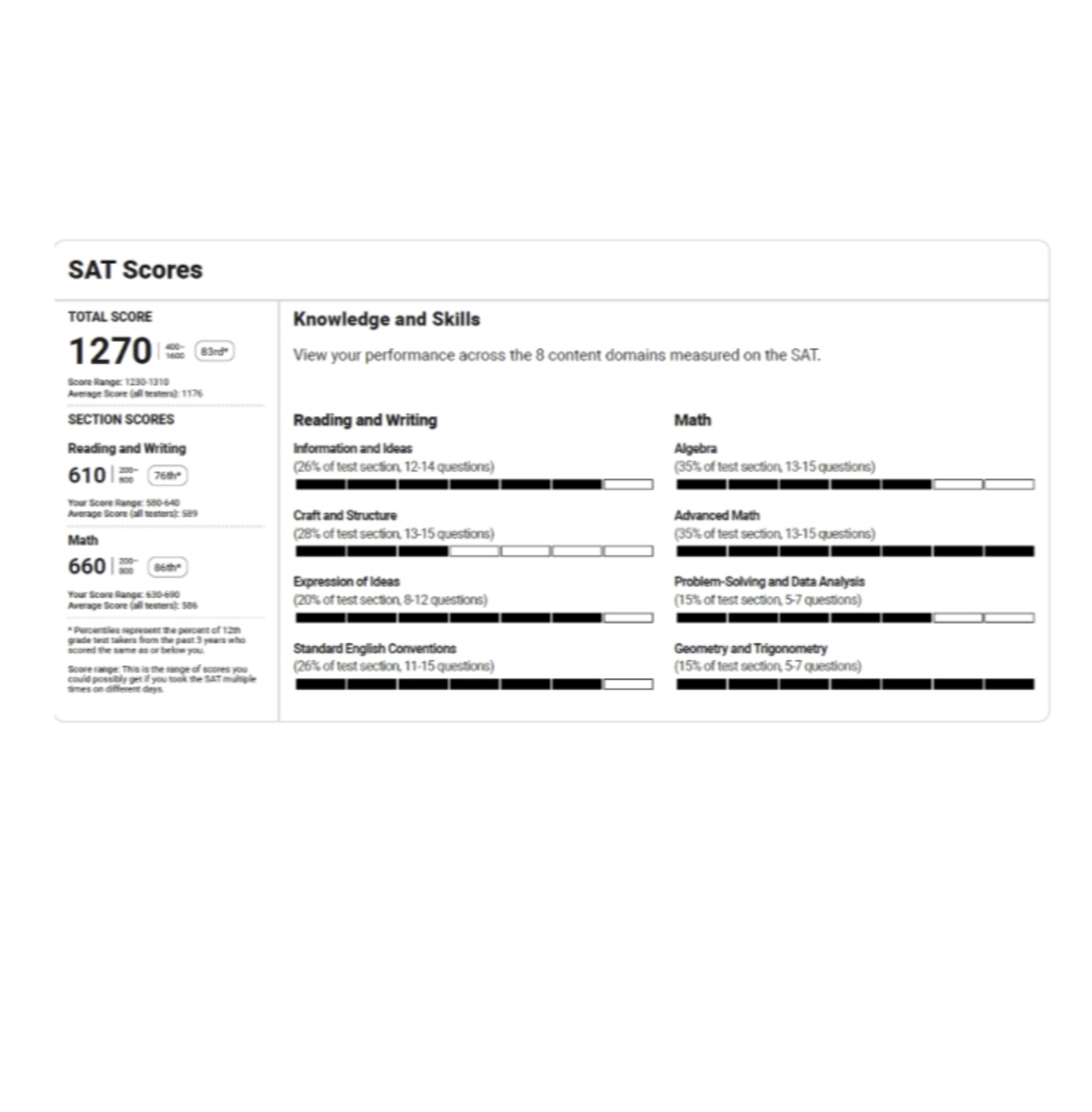
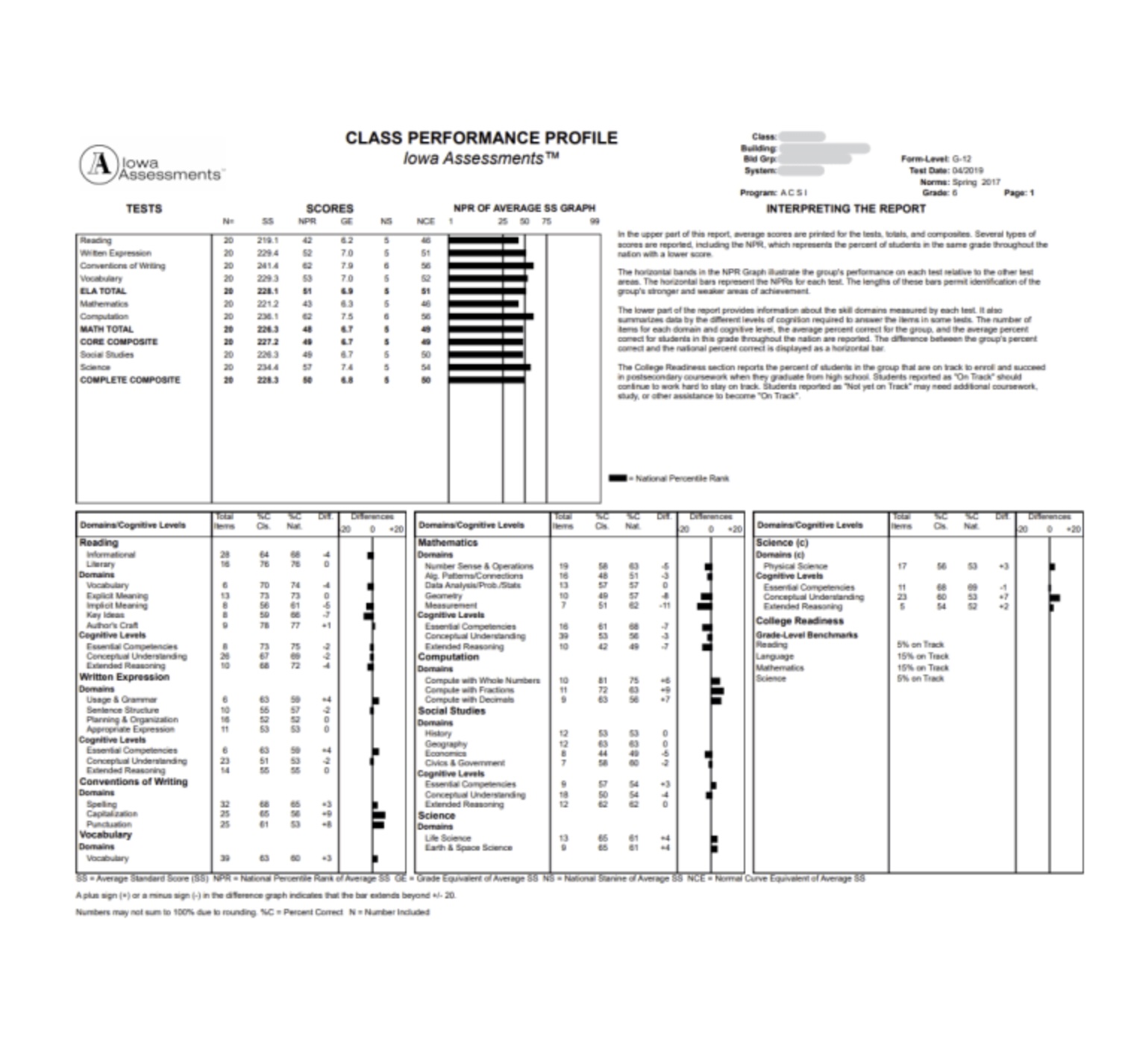
Sample student reports from NYS ELA, MAP, SAT, and ACT