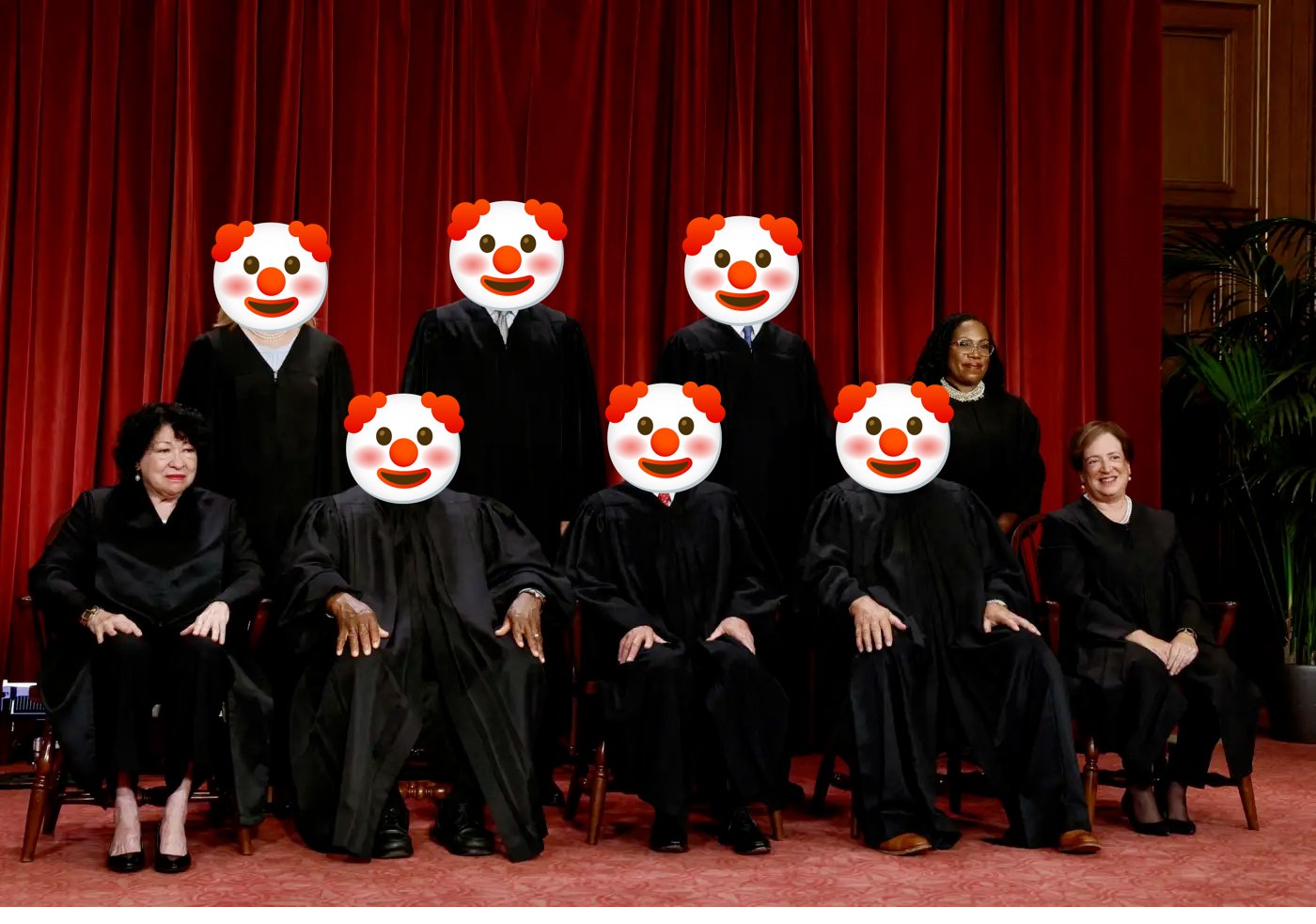
Many college-bound families, like mine, in the midst of the college journey are wondering what the Supreme Court decision to codify into law the pretense that race doesn't impact opportunity means for their child's chance of getting into college. You're probably also wondering whether you should do anything different than you would have done previously. You'll probably see a lot of rhetoric that suggests that affirmative action has ended (this case was not about affirmative action) and thus Black and brown students can't get into schools anymore. You're probably going to see a whole lot of businesses try to sell you the magic solution to get you into the school of your dreams in the "new landscape."
I'm here to tell you, as seems to be my lot in life, DON'T BELIEVE THE HYPE (a sequel)!
While the conservative ideologue judges did restrict one limited practice for some college admissions offices, the impact on your child and your child's application process will be a. unclear and b. likely limited.
A few facts about college admission
Getting into college is not hard; most colleges admit most of their applicants.
Most colleges are pretty inclusive and, in fact, "have to admit students they'd prefer to deny," as Jon Boeckenstedt (enrollment researcher, not R&B singer) puts it. In fact, 90% of colleges admit more than 50% of their applicants and only 4% (74 out of 1,979 four-year non-profit colleges) admit less than 25% of applicants. So, as a practical matter for families, this conversation is largely about the 4% of colleges that are highly rejective (and some rollover impact). Getting into college isn't hard. Getting into colleges that act like country clubs is hard.
Race has never been the determining factor in admission.
At rejective, slightly rejective, and highly rejective colleges, wealth has far greater impact than race and gender has more of an impact than race. Affirmative action in the form of reserved spots or quotas has been illegal for decades and even race-conscious admission has been banned in 9 states for years. Sure, some colleges who have the luxury of "shaping" a class have considered non-numeric factors in admission. Those factors include geography, gender, family income, ability to pay, likelihood to donate in the future, legacy status, sports participation, connection to faculty, etc.
So what should parents and students do differently in coming years?
Nothing.
Really, nothing. Stay the course.
Apply where you were going to apply. Don't change any plans because of this ruling. There is no way for you, or anyone who is not working in that admission office, to know how any individual admission office will be impacted by this ruling or how it will be applied when reading files. You should do exactly what you should have been doing all along.
Students should work hard to learn everything you can and excel in school. Families should figure out what education and career opportunities you want to create and do what you can to create them. Apply to colleges not because you think you'll get in (or not) but because you want to go there.
Don't hyperfocus on one brand. College is a waystation along the way, it's not the be-all end-all of existence. The purported "network effect" of brand-name colleges may or may not have value for your family, and the benefits might not be worth the social and financial costs.
What should you do that you should have been doing all along?
Not buying into or perpetuating the hype.
The myth of meritocracy has for too long been sold by higher ed. Colleges have never just admitted the "best and brightest" (whatever that means). Colleges have always admitted those they choose to admit based on factors they choose to consider. Those factors were often genealogy and hereditary wealth. The number of attacks on your right to be in "their spaces" or why you're there will continue. Be ready. Be strong. Be clever. If JFK was qualified with this essay, then all of us are:

Working with those who know.
Your family should continue collaborating with a college counselor or high school counselor, especially if your counselor shows they are supportive of your student's aspirations. There are also other resources, books, websites, organizations, and independent counselors who can help support you (some free, some not). There are also good journalists who help inform the process.
Preparing for uncertainty.
In the last few years the college process has had significant changes; this decision is yet another.
- The number of high school students is decreasing.
- Applications have spiked at many colleges.
- More than 80% of colleges are test optional.
- Costs are rising.
- International students are changing where they apply.
- Athletic recruiting has changed (NIL, COVID year, transfer portal).
- FAFSA formula has changed.
The collective impact of all of this is more ambiguity. There was never real certainty about who gets in or why, especially at highly rejective colleges. Ignore websites that purport to tell you the probability of admission. Ignore the quest for certainty.
Protecting your family's sanity.
Social media makes all of this worse. Think carefully before you participate in a public admissions process. Your family does not have to share wins and losses with the world. This is not a joint project. This is not a community experience.
Watching what they say and do.
If you're a person of color in the US you should have learned by now to live by Maya Angelou's words: "When someone shows you who they are, believe them the first time." Some colleges have made clear, strong statements about their values and principles.
For almost two hundred years, Fordham has invested in the talent that would have been squandered by the world. We have proved the magnificent results. And we refuse to pull up the ladder behind us.
Strong statements in response to the ruling are important and help you understand the principles that might guide practice. Looking at the data will also inform you. Will this school create an environment in which your child will be safe to learn, grow, and develop?
What can you do to help others?
Change your workplace.
If you're in the position to influence hiring considerations, push your workplace to stop exalting colleges simply on the basis of brand. We have to work to improve the understanding of the quality of education provided across institutions rather than relying on brand as a proxy (it's a bad one). We have to stop companies from using rankings and brand recognition to guide recruiting and hiring practices.
Change how you talk about schools and students.
This court decision is the result of ahistorical vibes and beliefs winning over facts. We all can contribute to tearing down the lies and false narratives. Don't be part of the problem. Don't perpetuate false narratives. Don't repeat platitudes.
Rather than discussing "merit" (a vague notion of ability that often just means test scores), discuss skills, abilities, and accomplishments. Rather than discussing "good" and "bad" colleges, define what you value in a college and which colleges have that. Define what you want for education and how to get there.
For further reading on race, class, and the admissions process, the resources page has books worth your time. In particular, Julie J. Park's Race, Class, and Affirmative Action is a rigorous, accessible examination of how these forces actually shape who gets access to selective higher education.